
Best Zirconia Milling Burs: How to Mill Without Chipping (Buying Guide)
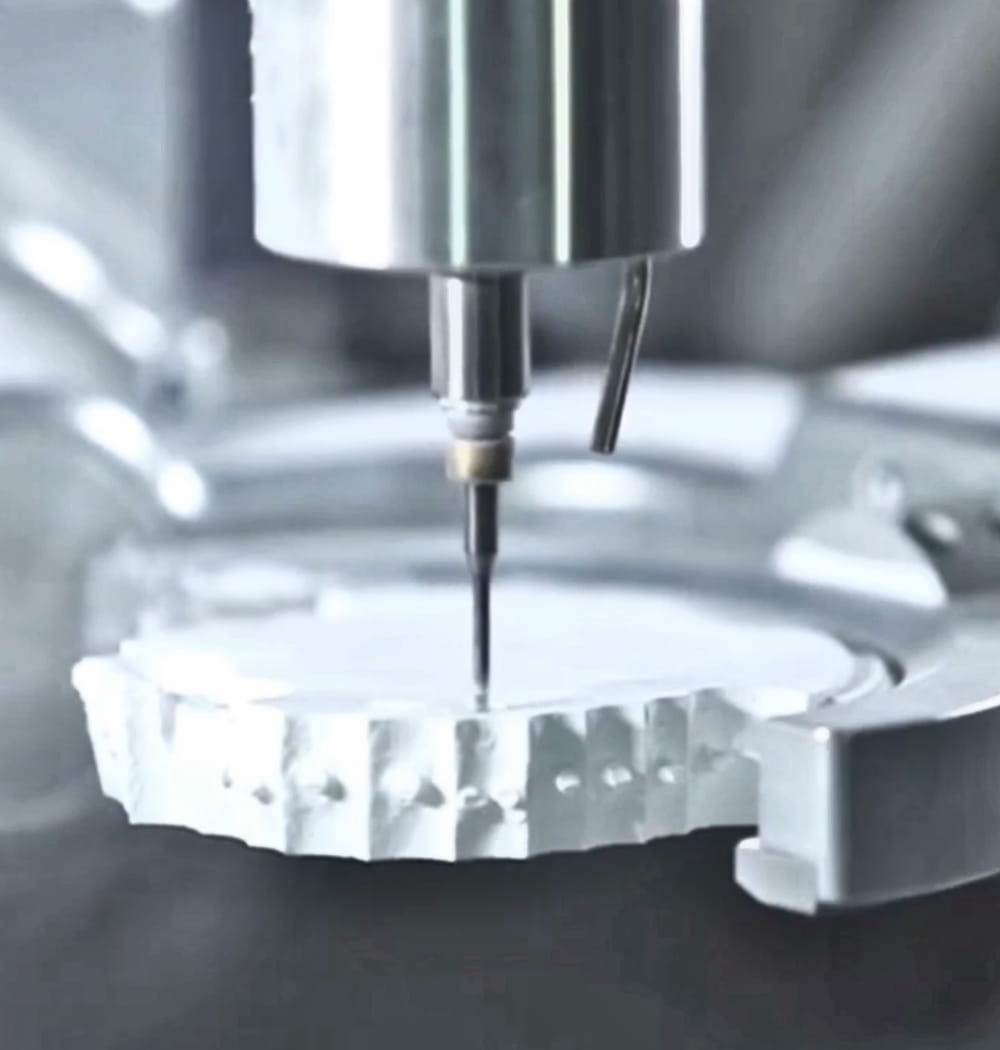
Why Zirconia Chips During Milling (And How to Stop It)
If you're milling zirconia and getting chipped margins, the problem is almost always one of four things: wrong bur coating, dull tools, bad parameters, or poor cooling. I've seen labs burn through expensive discs because they tried to save money on burs or skipped basic maintenance.
Here's what actually causes margin chipping:
- Wrong tool coating — Low wear resistance or excessive friction at the cutting edge creates micro-cracks that propagate into visible chips.
- Dull cutting edges — Blunt burs crush the material instead of cutting it. Once you're crushing, every margin is at risk.
- Bad machining parameters — Excessive feed rate or incorrect RPM increases vibration and heat buildup.
- Insufficient cooling or air blast — Friction builds up and generates micro-cracks during milling, especially on thinner sections.
The good news: with the right coating, sharp tools, and dialed-in parameters, chipping drops to near zero — even in high-volume production. I've watched labs go from 15% remake rates to under 2% just by switching burs and adjusting feed rates.
DC vs DLC Coating: Which Zirconia Milling Bur Should You Buy?
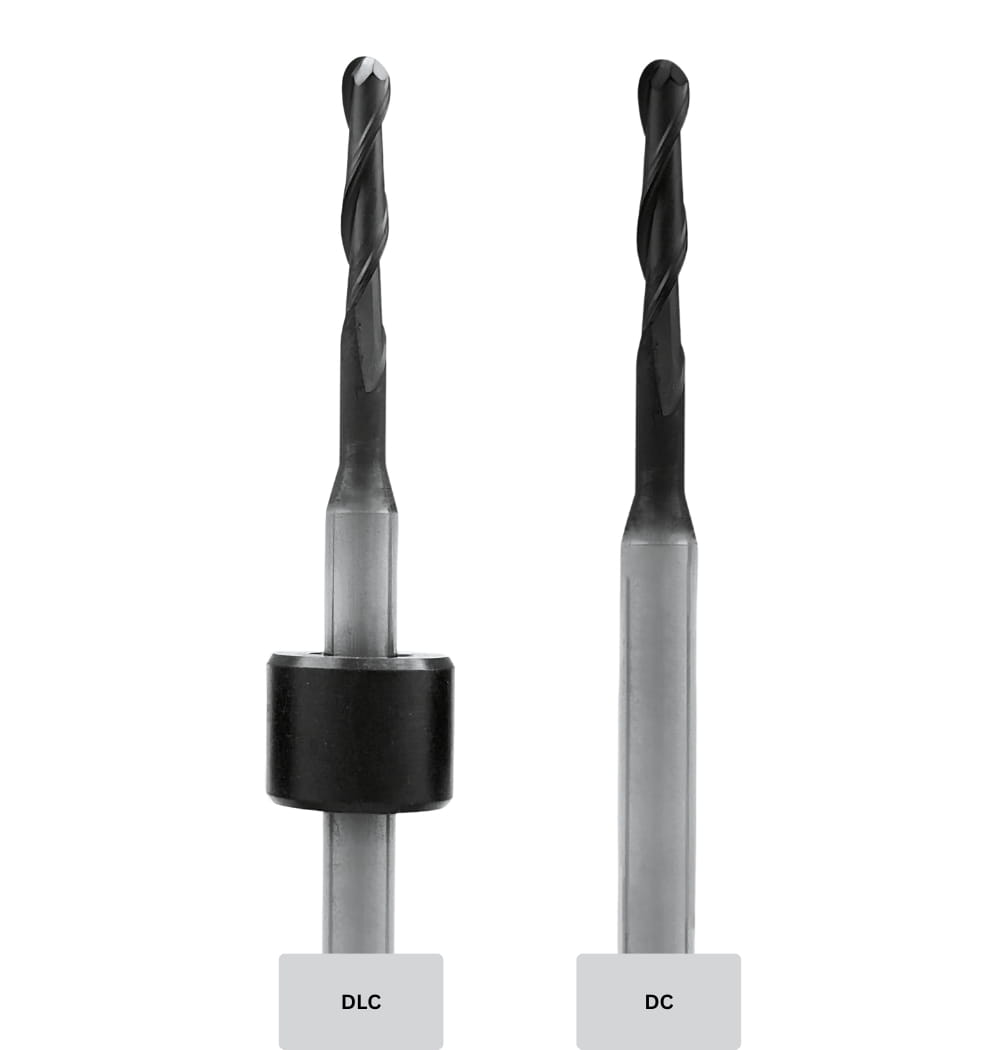
Coating choice is the single biggest factor in zirconia bur performance. Here's the honest comparison:
| Coating | Full Name | Key Advantages | Best For |
| DC | Diamond Coated (CVD) | Ultra-hard surface, exceptional wear resistance | High-volume labs milling 50+ units/day. Handles zirconia's abrasiveness, maximizes bur lifespan |
| DLC | Diamond-Like Carbon | Low friction, smoother cutting, reduced heat | Labs prioritizing margin quality. Prevents micro-cracking, delivers cleaner margins |
Which should you buy?
- High-volume production (50+ crowns/day): Go DC. Outstanding durability across hundreds of crowns. You'll replace burs less often, which saves money long-term.
- Premium finish and edge perfection: Choose DLC. Best for high-value anterior cases or aesthetic-critical work where margins need to be flawless.
- Not sure? Start with DLC — it's more forgiving on parameters and gives better results for most labs. For a deeper dive into diamond coatings, check our CVD diamond coated milling burs guide.
Machine Settings That Reduce Chipping
Even the best bur won't save your restorations if the machine isn't properly tuned. I've seen expensive DC burs underperform cheap ones just because the feed rate was wrong. Here are the parameters that actually matter:
| Parameter | Recommendation | Why It Matters |
| RPM | 20,000–25,000 | Minimizes vibration while maintaining sharp, clean cutting |
| Feed Rate | 100–300 mm/min (material dependent) | Too fast causes edge crushing; too slow generates excess heat |
| Cooling/Air | Continuous air blast (dry milling) | Reduces dust accumulation, lowers thermal stress |
| Tool Path | Climb milling strategy | Reduces edge stress, produces smoother margins |
| Step-Down | 0.5–1.0 mm per pass | Shallow passes reduce tool deflection and chipping risk |
Pro Tip: If you detect micro-chipping during QA inspection, check tool wear first, then make small incremental feed adjustments (drop 10-15% at a time). Don't change RPM and feed simultaneously — isolate the variable. For more on machine-specific settings, see our zirconia milling burs selection and speed settings guide.
Extending Tool Life Without Sacrificing Quality
Bur replacement is one of the biggest recurring costs in any milling lab. Here's how to get the most life out of your zirconia burs:
- Use dedicated zirconia burs — Never cross-use with PMMA, wax, or metals. Zirconia dust is extremely abrasive and contaminates the cutting edge differently than other materials.
- Replace on schedule — DLC-coated burs typically last 300–800 crowns depending on the zirconia brand. DC burs can push past 1,000 in ideal conditions. Don't wait for visible chipping to replace — by then you've already produced bad units. Learn the 5 visual signs it's time to replace your milling bur.
- Clean regularly — Fine zirconia dust is highly abrasive and accelerates edge dulling. Blow out the spindle area after every run.
- Track cost per unit — Cheap burs that last 200 crowns cost more per unit than quality burs lasting 800. Do the math before you buy. Our cost per milled unit calculator walks you through this.
OEM vs Compatible Zirconia Milling Burs: What to Know Before You Buy
This is the question every lab owner asks: can I save money with compatible (aftermarket) burs without sacrificing quality?
The short answer: yes, if you buy from the right supplier. The coating quality and carbide grade matter far more than the brand name on the box. Many compatible burs use identical raw materials and coating processes as OEM burs at 40-60% of the price.
The key things to check:
- Carbide grain size (sub-micron or ultra-fine is what you want for zirconia)
- Coating method (CVD diamond or PVD DLC — ask the supplier)
- Dimensional tolerance (should match OEM within ±0.005mm)
We've covered this in detail in our OEM vs compatible milling burs comparison. Worth reading before your next purchase.
Monolithic vs Layered Zirconia: Does It Affect Bur Choice?
Yes — and most people don't think about this. Multi-layer and high-translucency zirconia grades (like 5Y-TZP) are softer than traditional 3Y-TZP. That means:
- You can often run slightly higher feed rates with translucent grades
- DLC burs perform especially well on multi-layer discs because the lower friction prevents delamination between color layers
- Traditional high-strength zirconia (3Y) benefits more from DC coatings due to its hardness
For more on this, read our guides on monolithic vs layered zirconia and multi-layer zirconia color gradient milling tips.
Bottom Line
Chip-free zirconia milling comes down to three things:
- The right coating — DC for volume and durability, DLC for premium surface quality.
- Correct machine parameters — RPM, feed rate, step-down, and cooling all need to be dialed in.
- Disciplined maintenance — Replace on schedule, clean regularly, and never cross-contaminate between materials.
Shop Zirconia Milling Burs
Browse our full range of zirconia milling burs with DC and DLC coatings, compatible with Roland, VHF, Amann Girrbach, Sirona, and 30+ other machines. Also check our zirconia blocks and discs if you're sourcing materials.
Frequently Asked Questions
How much do zirconia milling burs cost?
Compatible zirconia milling burs typically cost $15–$45 per bur depending on the coating, diameter, and machine compatibility. OEM burs run $40–$120+ each. Since a quality compatible bur can mill 300–800+ crowns, your actual cost per crown is often under $0.10 — far less than the zirconia disc itself.
What are the best zirconia milling burs?
The best zirconia burs use either CVD diamond coating (DC) for high-volume milling or diamond-like carbon coating (DLC) for premium margin quality. Look for sub-micron carbide substrates and tight dimensional tolerances. Brand matters less than coating quality and carbide grade — many compatible burs outperform OEM options at half the price.
How long do zirconia milling burs last?
A DLC-coated zirconia bur typically lasts 300–800 crowns. DC (diamond coated) burs can exceed 1,000 crowns under optimal conditions — correct RPM, proper feed rate, and dedicated use (no cross-material milling). If your burs are dying before 200 crowns, your parameters are likely off or you're using an uncoated or poorly coated tool.
Can I use the same milling bur for zirconia and other materials?
Technically yes, but you shouldn't. Zirconia dust is extremely abrasive and changes the cutting edge geometry in ways that make the bur perform poorly on softer materials like PMMA or wax. And residue from softer materials can clog the flutes when you switch back to zirconia. Dedicated burs per material type is the standard practice in any serious lab.
Are compatible (aftermarket) zirconia burs as good as OEM?
The best compatible burs are functionally identical to OEM — same carbide grades, same coating processes, same dimensional specs. The difference is you're not paying for the machine manufacturer's markup. That said, not all compatible burs are equal. Ask your supplier about carbide grain size, coating method, and tolerance specs before buying. Read our full OEM vs compatible burs comparison for details.