
Sirona MCX5 and MCXL Compatible Milling Burs: Setup, Selection, and Lifespan
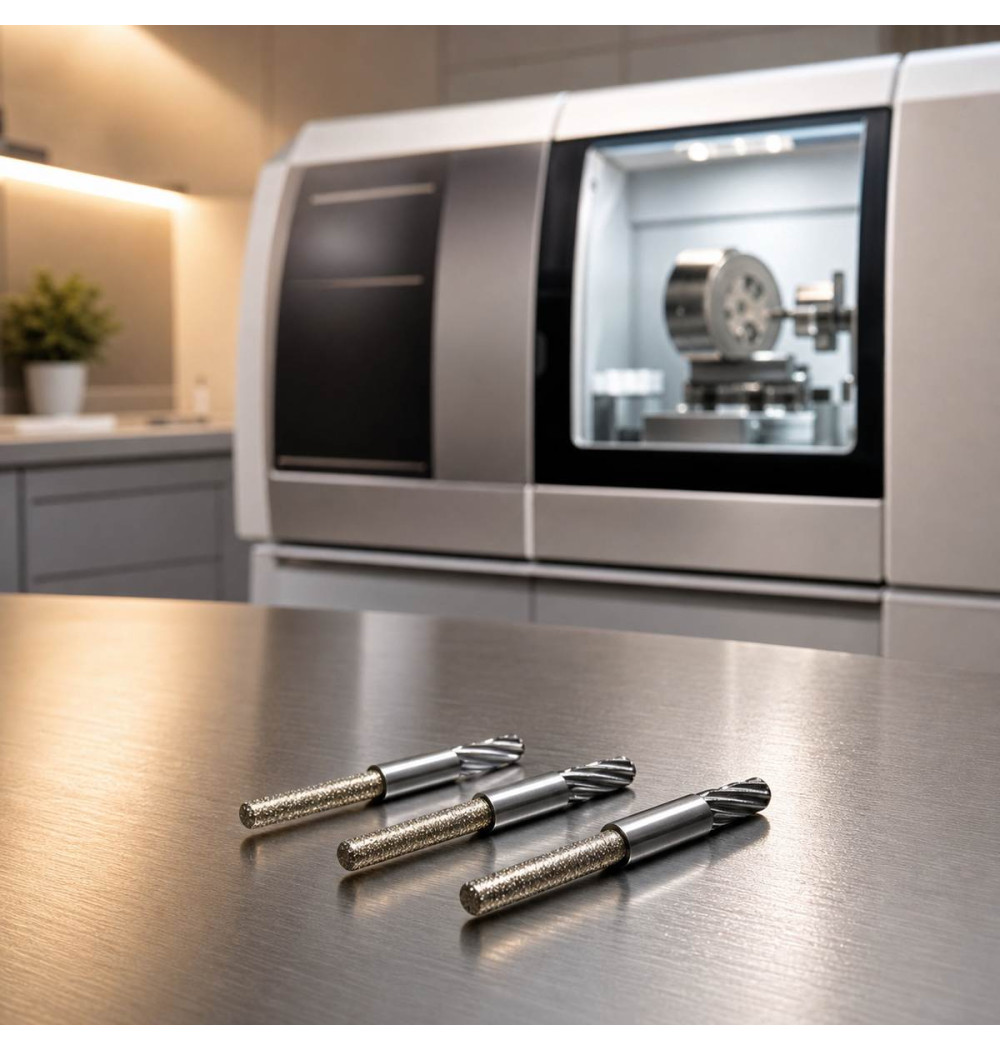
If you run a Sirona MCX5 or MCXL chairside, your bur magazine is the first place a tough day shows up. Wrong shank, wrong material match, OEM tools two months past their replacement window — any of it turns a 12-minute glass-ceramic crown into a remake. This guide is what we tell techs when they ask which milling burs actually belong in a Sirona MCX5 or MCXL, how long the tools should last, and where compatible burs make sense over Sirona-branded ones.
Sirona MCX5 vs MCXL: What Actually Differs
Both machines target the same workflow — chairside or small-lab dry/wet milling for CEREC restorations — but the geometry and tool magazine differ enough to matter when you're ordering burs.
| Spec | MCX5 | MCXL |
|---|---|---|
| Axes | 5 | 4 |
| Tool magazine | 6 positions | 6 positions |
| Spindle | 60,000 rpm synchronous | 60,000 rpm synchronous |
| Shank standard | Ø3 mm cylindrical | Ø3 mm cylindrical |
| Wet/dry | Wet + dry | Wet + dry |
| Block sizes | Up to 85 mm bridges | Up to 65 mm bridges |
| Typical materials | Zirconia, glass ceramic, hybrid, PMMA, composite | Glass ceramic, hybrid, zirconia (limited), PMMA, composite |
The practical takeaway: if you're running a lot of multi-unit zirconia work, the MCX5's fifth axis pays for itself in fewer re-fixturings. Bur selection for those cases differs too — see our breakdown of zirconia milling burs for the geometry that holds up under pre-sintered Y-TZP. If most of your work is single-unit lithium disilicate and hybrid ceramics, the MCXL handles it without complaint — and the same logic applies to picking glass ceramic milling burs for those materials.

Bur Holders, Magazine Layout, and the Shank Standard
Both machines use the same Ø3 mm cylindrical shank — that's the part most techs get right. What trips people up is the magazine layout: Sirona uses fixed tool positions, not generic slots. Each position is mapped in the InLab software to a specific bur type (Shaper, Finisher, Drill, etc.). If you put a Step Bur 12 S where the software expects a Cylinder Pointed Bur 1.0, the machine doesn't know — it just mills with the wrong geometry until your margin looks like sandpaper.
Practical rule: load by software position, not by what looks similar. The InLab tool database is the source of truth, not the print on the bur shaft.
Common Sirona OEM Burs by Material
- Cylinder Pointed Bur 1.6 / 1.0 / 0.5 — primary roughing and shaping for glass ceramic, lithium disilicate
- Step Bur 12 / 20 S — fast removal in zirconia and hybrid ceramic
- Shaper 25 / 50 RZ — fissure and occlusal detail on zirconia
- Finisher 10 / 8 / 7 — final surface pass; one of the first to wear
- Drill 1.0 / 1.6 / 2.0 — implant-related and pilot work
Material-to-Bur Selection: A Working Lab's Cheat Sheet
This is the shortcut sheet we hand to new techs. It's not exhaustive, but it covers ~90% of what comes off a Sirona machine.
| Material | Roughing | Finishing | Wet/Dry | Notes |
|---|---|---|---|---|
| Lithium disilicate (Emax) | Cylinder Pointed 1.6 | Finisher 10 | Wet | Pre-crystallized, ~12 min/unit |
| Feldspathic glass ceramic | Cylinder Pointed 1.6 | Cylinder Pointed 0.5 | Wet | Brittle; gentle finishing pass |
| Hybrid ceramic (Vita Enamic, Cerasmart) | Step Bur 12 | Finisher 10 | Wet | Easier on burs than zirconia |
| Pre-sintered zirconia | Step Bur 12 / Shaper 25 RZ | Cylinder Pointed 1.0 | Dry | Dust extraction matters; clogged extractor = chipped margins |
| PMMA (try-in, temporaries) | Step Bur 12 | Finisher 10 | Dry | Sharp bur or it melts the resin |
| Composite resin blocks | Step Bur 12 | Finisher 10 | Wet | Same as PMMA — sharpness over speed |
Two field rules worth committing: zirconia kills Finisher 10s about 3× faster than glass ceramic does, and any time you switch from wet to dry milling, blow out the bur shanks before loading — water residue carries glass-ceramic dust into the collet and throws runout.
Sirona OEM vs Compatible Burs: The Real Math
Sirona-branded burs are reliable. They're also priced at roughly 2.5–3× compatible equivalents. The question isn't "are they better?" — it's "are they enough better to justify the spread?" Here's what we see in practice:
| Criterion | Sirona OEM | Quality compatibles |
|---|---|---|
| Shank tolerance | ±0.005 mm | ±0.005–0.010 mm (good vendors) |
| Diamond grit consistency | Very tight QC | Varies by lot — ask for QC docs |
| Lifespan (glass ceramic) | 40–60 units | 30–50 units |
| Lifespan (zirconia) | 20–30 units | 15–25 units |
| Cost per unit milled | $$$ | $ — typically 40–50% lower |
For high-volume zirconia work where you're already replacing burs weekly, compatibles win on cost per unit. For implant pilot drilling or anything where a sub-margin chip costs you a remake, stick with Sirona OEM. The deeper breakdown lives in our OEM vs compatible milling burs piece — the numbers there apply to MCX5/MCXL one-for-one.
Lifespan Benchmarks and When to Swap
Tracking bur life by unit count beats tracking by calendar. A bur that mills two zirconia bridges a day wears out faster than one that touches three glass-ceramic crowns. Lab owners we work with log it in a shared spreadsheet — block material, bur position, unit count, replacement date.
Rough benchmarks for the Sirona Ø3 mm line on MCX5/MCXL:
- Cylinder Pointed Bur 1.6 — 50–70 glass ceramic units, 25–35 zirconia
- Cylinder Pointed Bur 1.0 — 40–60 units across materials
- Cylinder Pointed Bur 0.5 — fragile; replace at first sign of margin fuzz
- Step Bur 12 S — 30–40 zirconia, 60+ on softer materials
- Shaper 25 RZ — 50+ zirconia units; one of the longest-lived
- Finisher 10 — 40–60 units; wear shows as glossy occlusal surfaces (the diamond is gone, you're burnishing)
Audible cues matter too. A fresh bur cuts with a steady tone. A worn one stutters, especially on the occlusal pass — that's the cue to swap before the next case, not after. If you want a deeper read on wear patterns, the bur wear signs guide covers the visual checks too.
Maintenance That Extends Bur Life
Three habits that move the lifespan numbers above by 20–30%:
- Clean the collet weekly. A grain of zirconia dust in the spindle taper introduces runout. Runout kills Finisher 10s in single-digit units. Use a clean toothbrush and compressed air — never solvent.
- Filter and change the milling coolant. Sirona's coolant gets loaded with glass-ceramic slurry fast. Once it's milky, it's no longer flushing chips; it's grinding them back into the work. Weekly drain, refill on schedule.
- Pre-sinter blocks fully before milling zirconia. Under-sintered blanks vary in hardness pocket-to-pocket — burs hit hard spots and chip. This is more a material-handling fix than a bur fix, but it's the single biggest variable in zirconia bur lifespan.
Frequently Asked Questions
Can I use VHF or Imes-Icore burs in a Sirona MCX5?
Only if the shank is Ø3 mm cylindrical and the geometry matches the InLab tool position. The shank fits mechanically, but Sirona's software expects specific bur profiles per slot. A mismatched profile mills with the wrong toolpath and produces a part that looks right in the software preview but is wrong on the screen.
How often should I replace Sirona milling burs?
By unit count, not by date. Track each bur position with a simple log. The Finisher 10 typically wears first (40–60 units); roughing burs last longer. Replace any bur the moment margins start showing fuzz or occlusal surfaces look glossy instead of matte.
Why does my MCX5 chip zirconia margins even with new burs?
Three usual suspects: dust extractor saturated with zirconia slurry, collet contamination causing runout, or under-sintered blanks. Check those first — the bur is rarely the actual cause when margins chip with fresh tools.
Are compatible burs safe for MCX5/MCXL warranty?
Sirona's warranty covers the machine, not the consumables you load into it. Using compatible burs doesn't void coverage as long as the shank and profile match spec. If a non-OEM bur causes spindle damage — extremely rare — that specific incident may not be covered. Quality compatibles with documented tolerances are a non-issue here.
Do I need different burs for MCX5 vs MCXL?
No. Both use the same Ø3 mm shank standard and the same bur catalog. The differences are software-side (tool positions, materials enabled) — the physical burs interchange.
Most of what makes a Sirona MCX5 or MCXL run smoothly comes down to two disciplines: load burs by software position rather than by sight, and track lifespan by unit count rather than by date. Compatible burs are a real cost lever for high-volume work; OEM is the safer call for anything implant-related. Either way, the machine rewards labs that treat the bur magazine as a live inventory, not a set-and-forget tray.