
Zirkonzahn M4/M5 Compatible Burs: The Real Cost of OEM Lock-in
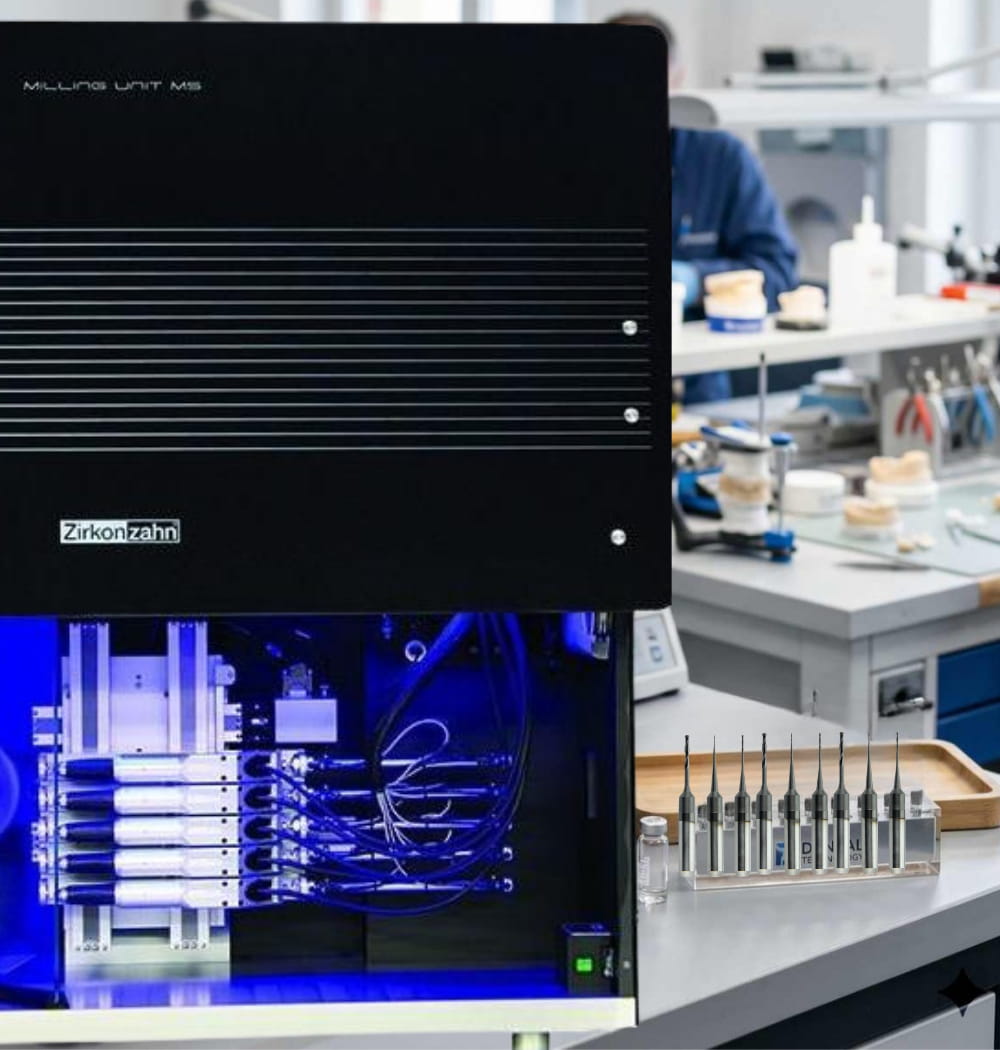
If you run a Zirkonzahn M4 or M5, you already know the feeling. The machine itself is solid — arguably one of the best wet milling platforms for metal and zirconia out there. But then you look at your bur invoice. And you look at it again. And you start wondering whether Enrico Steger personally hand-grinds each one.
Zirkonzahn compatible milling burs have been a quietly growing alternative for labs that want to keep their M4 and M5 machines running without paying the OEM premium. This article breaks down the real numbers, what you're actually getting with OEM burs versus compatible alternatives, and where the lock-in trap gets expensive.
What Makes Zirkonzahn Bur Pricing Different
Zirkonzahn has always positioned itself as a premium, vertically integrated system. They make the machines, the software, the blanks, the burs, the furnaces — everything. That's their pitch: one ecosystem, one phone number to call when something goes wrong.
Fair enough. But that vertical integration comes with a cost structure that doesn't always make sense at scale.
The OEM Price Reality
A full set of OEM Zirkonzahn zirconia milling burs for the M5 Heavy Metal typically runs between $180-$350+ depending on your region and dealer. For metal milling burs, expect even higher — TiSiN-coated carbide tools for CoCr and titanium aren't cheap from anyone, but Zirkonzahn's markup puts them firmly at the top of the market.
Compare that to compatible burs in the $20-$30 range per tool. Even accounting for potential differences in lifespan, the math is hard to argue with.
The "Warranty" Argument
This is the one Zirkonzahn dealers love to bring up. "Use our burs or you void your warranty." It sounds scary. In practice? Most labs running M4s and M5s are well past their warranty period. And even within warranty, proving that a compatible bur caused spindle damage — versus normal wear, operator error, or a bad blank — is a stretch. Not saying it can't happen. Just saying it rarely does when you're using properly spec'd tools.
Compatible Burs: What's Actually Different
Here's where it gets interesting. A Zirkonzahn M5 Heavy Metal compatible bur isn't some random carbide rod shoved into a 6mm shank. The good ones are manufactured to the same dimensional tolerances, use the same substrate grades, and apply the same coating technologies — diamond-coated (DC) or diamond-like carbon (DLC) for zirconia, TiSiN or CrN for metals.
Shank Specifications
Zirkonzahn machines use two shank sizes depending on the model:
| Machine Model | Shank Diameter | Materials |
|---|---|---|
| M1 Wet Heavy Metal / M2 Series / M4 Wet Heavy Metal / M5 Heavy Metal / M6 | 6mm | Zirconia, Metal |
| M1 Soft | 3mm | Zirconia, PMMA, Wax |
Compatible burs match these shanks exactly. The critical dimension isn't just the diameter — it's the overall length, the cutting geometry, and the runout tolerance. A bur with poor concentricity will chatter, leave rough margins, and yes, wear your spindle faster. That's true whether it costs $25 or $250.
Coating Quality
For zirconia milling, the coating is everything. DC (diamond-coated) burs use chemical vapor deposition to bond a polycrystalline diamond layer to the carbide substrate. DLC (diamond-like carbon) is a thinner, smoother coating that works better for fine detail burs under 1.0mm.
The coating technology itself isn't proprietary to Zirkonzahn. The same CVD reactors that coat OEM burs coat compatible ones. What varies is the coating thickness, adhesion quality, and post-coating finishing. A well-made compatible bur from a reputable manufacturer uses the same process parameters as OEM tools.
Cost Per Unit: Where the Numbers Get Real
Let's do some actual math. Say you're milling 15-20 zirconia units per day on your M5. A typical bur set might last you 300-500 units before the margins start getting fuzzy and your fit checks go sideways.
| Factor | OEM Burs | Compatible Burs |
|---|---|---|
| Average cost per bur | $50-$80 | $20-$28 |
| Burs per set (typical) | 5-6 | 5-6 |
| Set cost | $250-$480 | $100-$168 |
| Units per set (estimated) | 400-500 | 300-450 |
| Cost per milled unit (burs only) | $0.50-$1.20 | $0.22-$0.56 |
Even in the worst-case scenario — compatible burs lasting 25% fewer units — you're still paying less per unit milled. And most labs report comparable lifespan when they source from quality manufacturers. Want to track this yourself? Our guide on how to calculate cost per milled unit walks through the full formula.
Metal Milling: The Gap Gets Wider
Metal burs wear faster regardless of brand. You're cutting CoCr, titanium, sometimes even stainless — materials that eat carbide for breakfast. OEM metal burs for the M4/M5 can run $60-$100+ per tool. Compatible metal milling burs with TiSiN or CrN coatings start around $28.
When you're replacing metal burs every 50-100 units, the annual spend difference between OEM and compatible becomes thousands of dollars. Not hundreds. Thousands.
The Lock-in Problem
Zirkonzahn's ecosystem approach creates a specific kind of vendor lock-in that goes beyond just bur pricing. It's worth understanding the full picture.
Software Dependencies
Zirkonzahn's milling software is designed to work within their ecosystem. The milling strategies, tool libraries, and parameter sets are all built around their own burs. Switching to compatible burs sometimes means you need to tweak feed rates, step-over values, or spindle speeds. Not a huge deal for an experienced technician, but it's a real learning curve for the first few jobs.
Start with a single bur diameter — say a 1.0mm — and run it alongside your OEM tools. Compare surface finish, margin accuracy, and tool life before swapping your entire kit.
Dealer Pressure
Some Zirkonzahn dealers actively discourage compatible burs. They'll point to the warranty, suggest that "only OEM tools are calibrated for the spindle," or imply that compatible burs will damage your machine. Most of this is sales pressure, not engineering fact. The OEM vs. compatible burs comparison is more nuanced than any dealer brochure will tell you.
When OEM Actually Makes Sense
Full disclosure: there are situations where OEM burs are the right call.
- Your machine is under warranty and you want zero risk
- You're milling a material you've never worked with before and want the OEM-validated parameters
- You have a specific geometry (like a 0.3mm bur for ultra-fine detail) where coating consistency matters enormously
- Your dealer offers genuine support and training as part of the bur package
Outside of these cases? You're paying a brand premium for a commodity cutting tool.
What to Look for in Compatible Zirkonzahn Burs
Not all compatible burs are created equal. Here's what separates the good ones from the junk.
- Runout tolerance under 5 microns. This is non-negotiable. Bad runout means chatter, poor margins, and spindle wear.
- Proper coating for the material. DC or DLC for zirconia. TiSiN or CrN for metals. If a supplier can't tell you their coating type, walk away.
- Correct overall length and geometry. Not just the shank — the entire tool profile needs to match.
- Consistent batch quality. One good bur means nothing if the next five are garbage. Ask about QC processes.
Also worth checking: does the supplier actually stock the full range of diameters you need? A 0.5mm, 1.0mm, and 2.0mm cover most zirconia work, but you'll eventually want 0.3mm, 0.6mm, 1.5mm, and 3.0mm for specific jobs. Nothing worse than sourcing from three different suppliers because nobody has the complete lineup.
And watch for the obvious signs of bur wear regardless of which brand you run. A worn bur is a worn bur — OEM or not.
Frequently Asked Questions
Will compatible burs void my Zirkonzahn machine warranty?
Technically, some dealer agreements state OEM consumables are required. In practice, proving that a compatible bur caused specific damage is very difficult. Most M4 and M5 machines in active use are past their warranty period anyway. The risk is minimal when using quality compatible tools with proper specifications.
Do Zirkonzahn compatible burs last as long as OEM burs?
Quality compatible burs typically achieve 75-100% of OEM bur lifespan. The difference depends on coating quality and substrate grade. Even at 75% lifespan, the cost per milled unit is still lower with compatible burs due to the significant price difference.
What shank size do I need for my Zirkonzahn machine?
The M1 Wet Heavy Metal, M2 Series, M4 Wet Heavy Metal, M5 Heavy Metal, and M6 Teleskoper use 6mm shank burs. The M1 Soft uses 3mm shank burs. Make sure you're ordering the correct shank for your specific model.
Can I use the same milling parameters with compatible burs?
Usually yes, with minor adjustments. Start with your existing OEM parameters and monitor for chatter or rough surfaces. You may need to reduce feed rate by 5-10% initially until you confirm the bur performs comparably. Most labs find no adjustment is needed with quality compatible tools.
Where can I find compatible burs for all Zirkonzahn machine models?
CADBURS stocks compatible burs for the full Zirkonzahn range including M1, M2, M4, M5, and M6 models, in diameters from 0.3mm to 3.0mm. Both zirconia (DC/DLC coated) and metal (TiSiN/CrN coated) burs are available.