
VHF K4 Milling Burs: Jensen vs Sierra Lifespan Comparison
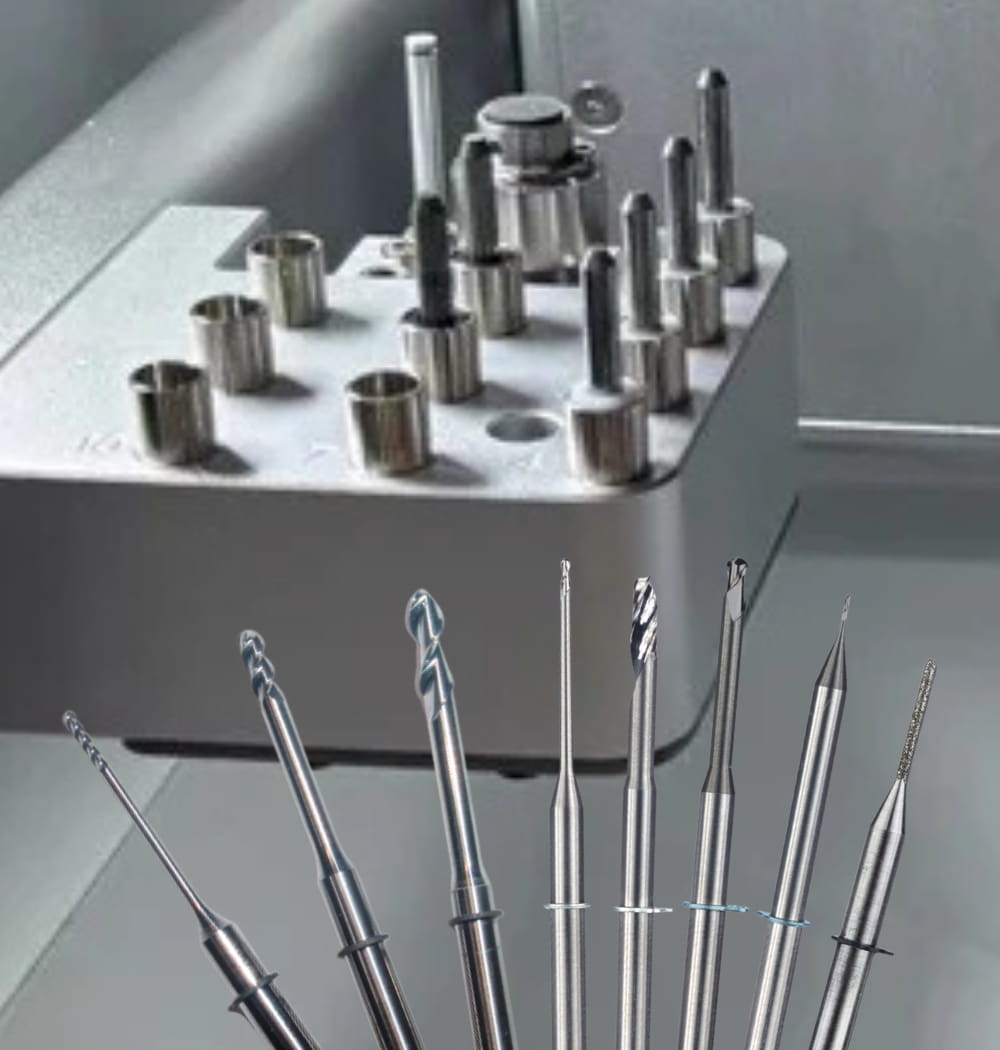
The VHF K4 Bur Problem Nobody Talks About
VHF K4 owners know the drill: you buy a set of burs, run zirconia for a week, and half of them are done. At seven crowns a day, some labs burn through a 2mm flat-end bur in five working days. That's not normal wear — that's a bur selection problem.
The K4 is a solid 4-axis dry mill. But its reputation for eating through VHF K4 compatible burs has more to do with which brand goes into the collet than the machine itself. Lab owners on dental forums have been comparing notes, and the differences are stark — 35 units per bur on one brand, 300+ on another.
Jensen Burs: The Stock Option
Many VHF dealers ship Jensen burs as the default. They work. They cut clean initially. But longevity is not their strength.
Forum reports from K4 users put Jensen 2mm flat-end burs at roughly 35 crowns before the cutting edge deteriorates enough to affect margin quality. That's about one week for a lab milling seven units a day. Some users stretch them to 50 units by dropping RPM, but at that point surface finish suffers and you're fighting the bur instead of trusting it.
The coating on Jensen burs appears to be a standard diamond deposit. Once it wears through — and on zirconia, it wears fast — the carbide substrate underneath can't maintain the cut. You start seeing chipping on margins, rougher surfaces, and longer cycle times as the CAM software compensates for a dull tool.
Sierra Nano Di: The 250-Unit Bur
Sierra's Nano Di line gets the most positive feedback from VHF users who've switched. Lab owners report 250 to 300 units from a single 2mm bur — roughly 8 to 10 times what Jensen delivers.
That's not a marginal improvement. That's a different product category.
The Nano Di uses a nanocrystalline diamond coating over a fine-grain carbide body. The coating is thicker and more uniform than what you get on budget burs, which means the diamond layer stays intact longer before the substrate is exposed. On a 4-axis machine like the K4 where dry milling generates significant heat, coating durability matters more than on wet-milling 5-axis systems.
At roughly $45-60 per bur, Sierra Nano Di costs more upfront than Jensen. But divide that by 275 units (mid-range estimate) and you're looking at $0.16-0.22 per crown. Jensen at 35 units? Even at a lower purchase price of $25-35, that's $0.71-1.00 per crown. The math isn't close.
Sierra Razor Sharp 1mm: 400 Units and Counting
For detail work and finishing passes, the Sierra Razor Sharp 1mm bur stands out. Users report around 400 units before replacement — an even better per-unit cost than the Nano Di.
The 1mm diameter means less contact area per pass, which reduces heat buildup and coating stress. Combined with Sierra's diamond formulation, this gives the Razor Sharp line its exceptional longevity. Labs running mixed materials (zirconia, glass ceramic, PMMA) on the same K4 report the 1mm burs lasting even longer, since softer materials between zirconia jobs give the coating micro-recovery time.
One thing to watch: the 1mm shaft is more fragile. If your K4 has any spindle runout or the collet isn't torqued properly, you'll snap these before they wear out. Check the signs of bur wear — breakage and wear are different problems with different fixes.
Why Lifespan Varies This Much
A 10x difference between bur brands on the same machine sounds extreme. Three factors explain most of it:
Coating thickness and uniformity. Budget burs use electroplated diamond that's 10-15 microns thick. Premium burs use CVD or multi-layer deposits at 25-40 microns. On zirconia, which is essentially grinding a ceramic, thicker coating means more material between the workpiece and the carbide body. Once carbide touches zirconia, the bur is finished.
Substrate quality. The carbide core matters. Fine-grain carbide (0.2-0.5 micron grain) holds the coating bond better and resists micro-fractures at the coating-substrate interface. Coarse-grain carbide is cheaper to manufacture but the coating peels faster under thermal cycling — exactly what happens in dry milling on the K4.
Geometry and flute design. A bur that evacuates debris well runs cooler. Clogged flutes on a dry mill mean the bur re-grinds its own swarf, accelerating coating wear. Sierra's flute geometry is designed for dry milling; Jensen's is more of a general-purpose design.
VHF K4 Specific Considerations
The K4 runs dry. No coolant spray, no mist — just compressed air and dust extraction. This makes bur selection more critical than on wet mills like the VHF K5 or VHF N4, where coolant carries away heat and debris.
Dry milling temperatures at the cutting edge can exceed 400C during heavy zirconia passes. At those temperatures, thermal expansion mismatch between coating and substrate creates micro-cracks that propagate with each pass. A coating designed for wet milling won't perform the same way dry — and most budget burs are designed for the general case, not specifically for dry 4-axis work.
RPM settings matter too. Running a 2mm bur at the factory-default RPM on the K4 might optimize cycle time, but it shortens bur life. Some labs drop to 80% of default RPM and report 15-20% longer bur life with acceptable cycle times. It's a tradeoff worth testing — faster cycles with more frequent bur changes, or slower cycles with fewer.
Recommended Settings for VHF K4 Zirconia
| Parameter | Budget Burs | Premium Burs (Sierra) |
|---|---|---|
| RPM (2mm roughing) | Reduce to 80% default | Factory default works |
| Feed rate | Reduce 10-15% | Factory default |
| Step-down | Shallower passes | Standard depth OK |
| Air pressure | Maximum — debris clearance critical | Standard |
Cost Per Unit: The Only Number That Matters
Bur price means nothing without lifespan context. Here's the real comparison:
| Bur | Price Range | Reported Lifespan | Cost Per Crown |
|---|---|---|---|
| Jensen 2mm | $25-35 | ~35 units | $0.71-1.00 |
| Sierra Nano Di 2mm | $45-60 | 250-300 units | $0.15-0.24 |
| Sierra Razor Sharp 1mm | $40-55 | ~400 units | $0.10-0.14 |
A lab milling 35 crowns per week spends roughly $35-50 weekly on Jensen burs for the 2mm position alone. Switch to Sierra Nano Di and that drops to $5-8 weekly. Over a year, that's $1,400-2,200 saved on a single bur position. Multiply across all positions in the tool magazine and the savings fund a new handpiece.
Frequently Asked Questions
How many crowns can I mill with one VHF K4 bur?
It depends entirely on the brand. Jensen burs average about 35 zirconia crowns. Sierra Nano Di burs reach 250-300 crowns. The difference comes down to coating quality and substrate material — not the machine.
Are Sierra burs compatible with VHF K4?
Yes. Sierra Nano Di and Razor Sharp burs use standard shank dimensions that fit VHF K4 collets. No adapter or modification needed — just match the shank diameter to your existing tool library.
Should I reduce RPM to extend bur life on the K4?
With budget burs, dropping to 80% of default RPM adds 15-20% more lifespan. With premium burs like Sierra, factory defaults work fine — the coating handles the heat. Reducing RPM on premium burs just slows your throughput for minimal gain.
Does milling material affect VHF K4 bur lifespan?
Zirconia is the hardest on burs — all the numbers above are for zirconia. PMMA and wax barely register. Glass ceramic falls somewhere in between. Labs that alternate between materials get longer bur life than those running pure zirconia all day.
Pick the Bur, Not the Price Tag
The cheapest bur on the invoice is rarely the cheapest bur per crown. VHF K4 users who track their actual cost per unit consistently land on premium burs — not because they want to spend more, but because the numbers force the conclusion. A $50 bur that mills 275 crowns beats a $30 bur that dies at 35, every time.