
Imes-Icore 250i Compatible Milling Burs: Setup & Selection Guide
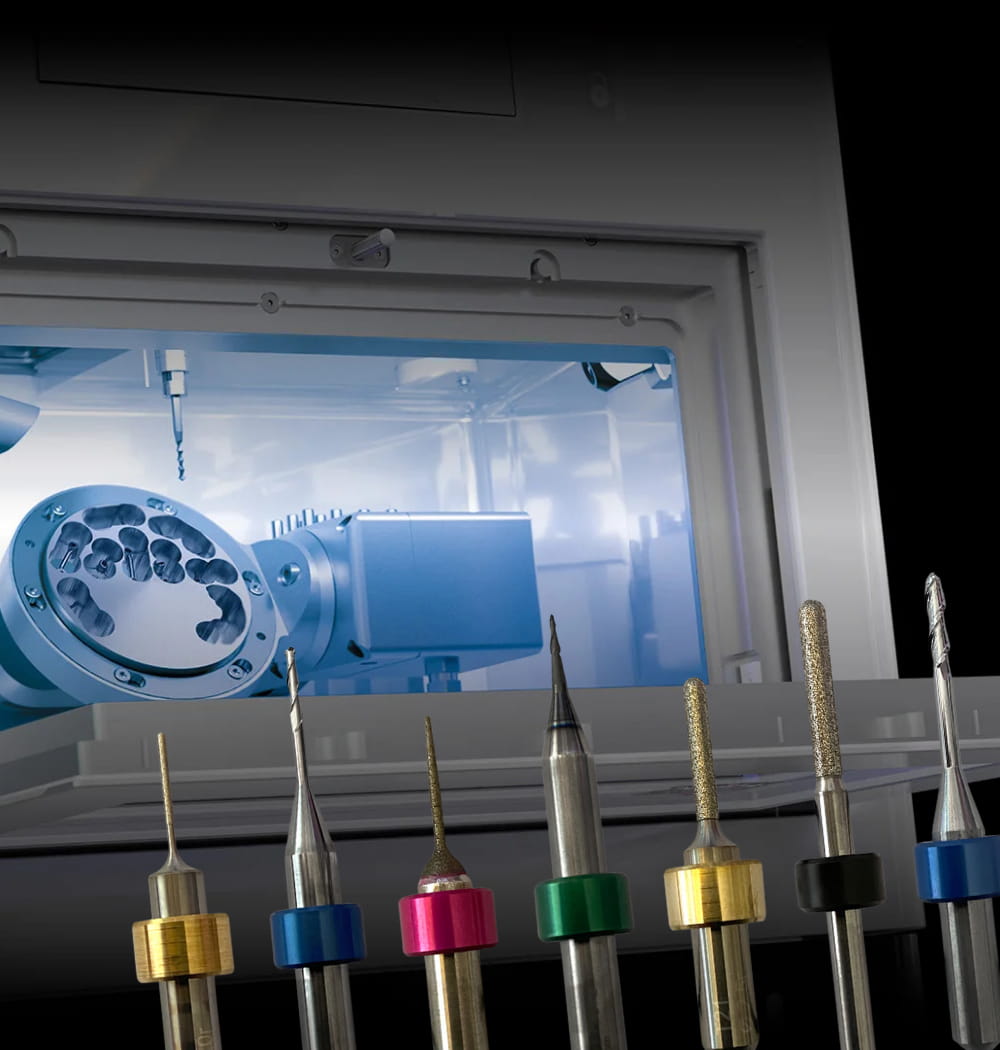
The Imes-Icore 250i: A Capable Machine with Expensive Habits
The Imes-Icore 250i is a serious 5-axis wet mill. German engineering, tight tolerances, solid build quality. But owning one comes with a reality check: OEM burs and consumables are not cheap, and the machine doesn't care whether the diamond coating on your bur was made in Germany or elsewhere. It cares about shank diameter, length, and cutting geometry.
That's where compatible burs come in. Labs running the 250i can cut tooling costs by 40-60% without sacrificing milling quality — if they match the specs correctly.
250i Bur Specifications: What Matters
The Imes-Icore 250i uses a 3mm shank diameter across its tool magazine. This is smaller than the 6mm shank on the larger 350i, so don't mix them up — a 350i bur physically won't fit.
| Spec | Imes-Icore 250i |
|---|---|
| Shank diameter | 3mm |
| Axes | 5-axis |
| Milling type | Wet (coolant spray) |
| Tool magazine | 16 positions |
| Spindle speed | Up to 60,000 RPM |
| Materials | Zirconia, glass ceramic, PMMA, wax, metal (with appropriate burs) |
The 5-axis configuration means burs approach the workpiece from more angles than a 4-axis machine, which distributes wear more evenly across the cutting surface. Good news for bur life — bad news for your wallet if you're paying OEM prices for 16 magazine positions.
Compatible Burs by Material
Zirconia Burs
Zirconia is where most 250i owners spend the bulk of their bur budget. Pre-sintered zirconia is abrasive enough to wear through coatings, but soft enough that a sharp bur handles it cleanly.
For the 250i, you need 3mm shank zirconia milling burs in three diameters: 0.6mm for detail work and margin finishing, 1.0mm for semi-finishing passes, and 2.5mm for roughing. Most labs keep two sets rotating — one in the magazine, one resting — to extend the total lifespan of each set.
Compatible zirconia burs for the 250i use the same diamond grain size (typically 40-60 micron for roughing, 20-30 micron for finishing) as OEM burs. The coating bond and substrate quality determine how long they last, not the brand name stamped on the shank.
Glass Ceramic Burs
Glass ceramic — lithium disilicate, leucite — requires different bur geometry than zirconia. The material is brittle, so aggressive cutting causes micro-fractures at the margin. Glass ceramic burs for the 250i use finer diamond grit and shallower flutes to produce a smoother cut with less chipping.
The 0.6mm glass ceramic bur gets the most use on anterior work where margin integrity matters. Keep a fresh one specifically for e.max crowns — don't run it until it's completely worn on zirconia and then switch to glass ceramic "because it's softer." A partially worn bur cuts inconsistently on brittle materials.
PMMA and Wax Burs
Provisionals and try-ins don't need diamond-coated burs. PMMA and wax burs for the 250i use uncoated carbide with polished flutes — the goal is chip evacuation, not grinding. These burs last significantly longer than zirconia burs because the material is so much softer.
One mistake labs make: using a worn-out zirconia bur for PMMA "to get the last bit of life out of it." Don't. A dull zirconia bur generates heat in PMMA, melts the material into the flutes, and produces rough surfaces. Dedicated PMMA/wax burs are cheap — use the right tool.
250i vs 350i: Don't Cross the Streams
Imes-Icore makes both the 250i (3mm shank) and the 350i (6mm shank). The product lines look similar online, and more than one lab has ordered the wrong shank size.
| Feature | 250i | 350i |
|---|---|---|
| Shank diameter | 3mm | 6mm |
| Target use | Standard dental lab | High-volume / metal milling |
| Metal burs available | No | Yes (ball, flat, drill types) |
| Compatible bur range | Zirconia, glass ceramic, PMMA | All above + CoCr, titanium |
If you're running a 250i and want to mill metal frameworks, you need to upgrade to the 350i or add a separate metal mill. The 250i's 3mm shank burs don't have the rigidity for CoCr or titanium — the lateral cutting forces will snap them.
Setting Up Your 250i Tool Magazine
Sixteen positions sounds like a lot until you realize how fast they fill up. Here's a practical magazine layout for a lab running mixed materials:
| Position | Bur | Material | Use |
|---|---|---|---|
| 1-2 | 2.5mm zirconia | Zirconia | Roughing |
| 3-4 | 1.0mm zirconia | Zirconia | Semi-finish |
| 5-6 | 0.6mm zirconia | Zirconia | Finishing / margins |
| 7 | 2.5mm glass ceramic | e.max / leucite | Roughing |
| 8 | 1.0mm glass ceramic | e.max / leucite | Semi-finish |
| 9 | 0.6mm glass ceramic | e.max / leucite | Finishing |
| 10-11 | 2.5mm PMMA | PMMA / wax | Roughing |
| 12 | 1.0mm PMMA | PMMA / wax | Finishing |
| 13-16 | Backup / spares | Various | Rotation stock |
Double up on the zirconia positions because those wear fastest. Positions 13-16 hold your next set of roughing burs so you can swap without stopping the machine for a resupply. Check the signs of bur wear regularly — catching a worn bur before it affects margin quality saves a remake.
Common 250i Issues and Bur-Related Fixes
Forum reports from 250i owners mention a few recurring problems. Some are machine issues, but several trace back to bur selection or maintenance:
Collet wear. The 3mm collet on the 250i sees constant tool changes. Over time, the collet bore wears slightly oval, which introduces runout. Runout kills burs fast — a 0.6mm finishing bur with 0.02mm runout wears unevenly and produces inconsistent margins. Replace the collet on schedule, not just when it breaks.
Calibration drift. The 250i's tool length calibration can drift after firmware updates or power interruptions. If your margins suddenly look rough with a fresh bur, recalibrate before blaming the bur. A miscalibrated length offset means the bur cuts deeper or shallower than the CAM path expects.
Coolant clogging. Wet milling produces slurry. If the coolant nozzles clog, heat builds up at the cutting zone and accelerates bur wear. Clean the nozzles weekly — this is the single cheapest thing you can do to extend bur life on any wet mill.
Frequently Asked Questions
Are compatible burs as good as Imes-Icore OEM burs?
For zirconia and glass ceramic, yes — as long as the shank diameter (3mm for 250i) and length match. The diamond coating quality varies by manufacturer, not by whether it says "Imes-Icore" on the label. Labs report identical margin quality and similar lifespan with compatible burs at 40-60% lower cost.
How often should I replace burs on the Imes-Icore 250i?
Zirconia roughing burs (2.5mm) typically last 150-250 units. Finishing burs (0.6mm) last longer per unit but need replacing sooner because margin quality is more sensitive to wear. Track your unit count per bur position — don't wait until you see chipping on the restoration.
Can I use 350i burs in a 250i?
No. The 350i uses a 6mm shank; the 250i uses 3mm. They are not interchangeable. Forcing a wrong-diameter bur into the collet damages both the bur and the collet.
What causes bur breakage on the 250i?
Three main causes: collet runout from worn collets, incorrect tool length calibration, and using burs past their effective lifespan. A 0.6mm bur with a worn coating doesn't cut — it pushes, and lateral force snaps the shank. Replace burs on time and check collet condition monthly.
The Math on Compatible Burs
A full 250i tool magazine — 12 active positions plus 4 spares — costs $600-900 with OEM burs. The same setup with compatible burs runs $250-400. Over a year with quarterly replacements, that's $1,400-2,000 saved on tooling alone. Not life-changing money, but enough to fund a maintenance contract or a set of premium blanks. The burs cut the same. The savings are real.