
How to Read Milling Bur Wear: 5 Visual Signs It's Time to Replace
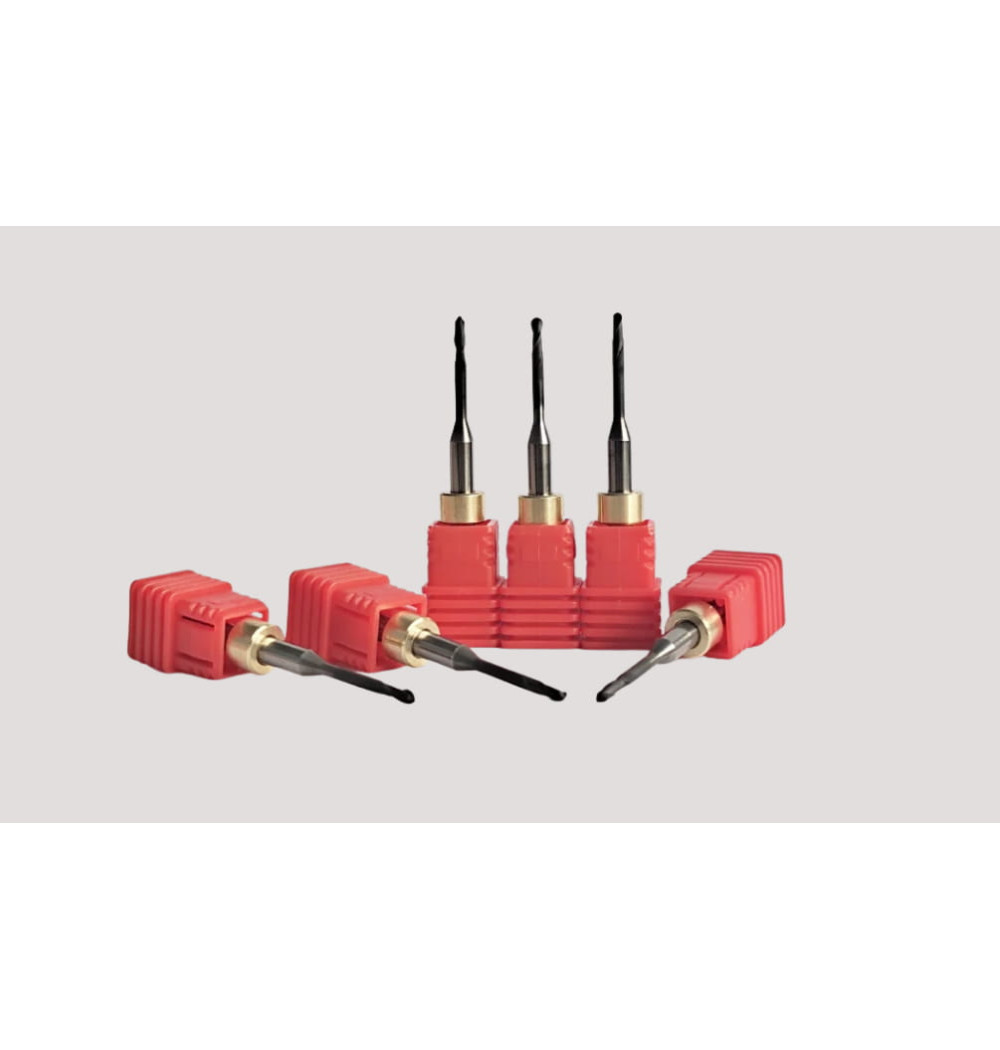
Running Worn Burs Costs More Than Replacing Them
Every lab tech has done it. You notice a bur looks a little rough, but there are six units queued up and no spares on the shelf. So you run it. Two hours later you're adjusting margins by hand, or worse, remaking a crown because the fit is off.
Worn milling burs are behind most of the "mystery" quality problems in dental labs. Chipped margins, rough surfaces, poor fit — these issues almost always trace back to a dull tool. The fix is simple: learn to spot wear before it ruins your work.
Here are five visual (and one audible) signs that tell you a bur is done.
Sign 1: Rounded Cutting Edges
This is the most reliable indicator. A fresh bur has crisp, defined cutting edges you can actually feel with your fingernail. Run your nail lightly across the flutes of a new bur — you'll feel it catch. Do the same on a worn bur and your nail slides right over.
Under a 10x loupe, the difference is obvious. New edges look sharp and angular. Worn edges look rounded, almost polished smooth. The cutting geometry that lets a bur shear material cleanly is gone.
What happens when you mill with rounded edges? The bur stops cutting and starts pushing material. Cutting forces go up, heat goes up, and your zirconia milling burs start deflecting instead of tracking their programmed path. The result is dimensional errors — especially on thin walls and margin lines where there's no room for deviation.
The fingernail test takes two seconds. Make it a habit every time you load a bur.
Sign 2: Coating Discoloration or Flaking
Most quality burs use diamond coatings — either PVD or CVD diamond coatings — over a carbide substrate. When the bur is new, the coating gives it a uniform color: typically gold, dark gray, or black depending on the coating type.
As the coating wears, you'll see color changes. Gold turns to silver. Dark gray develops bright spots. You're seeing the bare tungsten carbide underneath. Once the coating is breached, wear accelerates fast because carbide alone can't handle the abrasion that diamond shrugs off.
Watch for patchy coatings — areas where color is inconsistent. If you see bare metal showing through in spots, that bur is done. Don't wait for it to fail completely. A bur with 30% coating loss will cut unevenly because some flutes are still sharp while others are dull. That inconsistency shows up as stepped surfaces and chatter marks on your restorations.
This is especially true for hard materials. Glass ceramic milling burs with compromised coatings will chip lithium disilicate rather than cutting it cleanly.
Sign 3: Chipped Flutes
Pick up any bur that's been in service for a while and look at the cutting edges under magnification. Chips and notches on the flutes are common, and even small ones cause problems.
What causes chipping? The usual suspects:
- Hitting the blank holder or clamp. This is the number one cause. A programming error or loose blank sends the bur into metal. Even a light touch can chip a flute.
- Wrong feed rates for the material. Pushing a bur too hard through dense zirconia puts shock loads on the cutting edges.
- Thermal cracking. Dry milling without adequate air cooling causes micro-cracks that eventually break into visible chips.
A chipped flute creates an imbalance. The bur vibrates because the cutting forces aren't symmetrical anymore. You'll feel this as increased vibration in the spindle, and you'll see it as surface waviness on the restoration. On machines like the Roland DWX-52D, which has a relatively lightweight spindle, even minor bur imbalance shows up in the finished work.
One chip means the bur is retired. There's no fixing it.
Sign 4: Increased Milling Noise
This one isn't visual, but it belongs on the list because it's often the first thing you notice — before you even look at the bur.
A sharp bur cutting at correct parameters makes a consistent, steady sound. The pitch and volume stay constant through the cut. When edges wear down, the sound changes:
- Higher pitch: The bur is working harder to cut. More friction, more heat, higher frequency vibration.
- Chattering or rattling: The bur is bouncing off the material instead of cutting into it. This is the "replace now" sound — if you keep running, you risk breaking the bur inside the workpiece.
- Inconsistent sound: Loud-quiet-loud patterns mean some flutes are cutting and others aren't. Uneven wear or a chipped flute.
Experienced techs can tell a bur is done just by listening. If your machine sounds different from yesterday on the same material with the same program, check the burs first. Nine times out of ten, that's the answer.
Sign 5: Poor Surface Finish on Restorations
This is the final proof — and unfortunately, it means the damage is already done.
When restorations come out of the mill with rough surfaces, visible tool marks, or stepped layers, and your CAM settings haven't changed, the bur is telling you it's finished. Specifically, watch for:
- Tool marks that won't polish out. Deep grooves from a bur that's plowing instead of cutting.
- Stepped surfaces. Layers that don't blend smoothly, especially on curved surfaces like occlusal anatomy.
- Rough margins. Ragged edges where the bur couldn't maintain a clean cut at thin cross-sections.
- Dimensional errors. Crowns that don't seat, or contacts that are off. A worn bur deflects more than a sharp one, so the actual cut path doesn't match the programmed path.
If you're seeing these problems, pull the bur and inspect it. Chances are you'll find one or more of the signs above. The question to ask yourself: how many units did you mill before you noticed? Those might need checking too.
The difference between OEM and compatible milling burs often shows up most clearly at end-of-life — quality compatible burs with proper coatings will show gradual, predictable wear. Cheap knockoffs sometimes fail suddenly with no warning signs.
Your 2-Minute Pre-Shift Inspection Routine
Don't wait for failed restorations to tell you a bur is worn. Build a quick check into your daily routine:
- Pull all burs from the spindle and collet. Line them up on a clean white surface.
- Grab a 10x loupe. A cheap jeweler's loupe works fine. Check each bur for the signs above: rounded edges, coating wear, chips.
- Run the fingernail test on each bur. If it doesn't catch, it doesn't cut.
- Log it. Write down which burs you replaced and when. After a few months, you'll know exactly how many units each bur type handles in your shop. That's your replacement schedule — no guessing, no surprise failures.
- Keep spares on hand. The worst time to discover you need a new bur is when you have cases waiting. Stock at least one backup for every bur size you use regularly.
This routine takes two minutes. It saves hours of rework and prevents the kind of quality problems that lose patient trust and doctor referrals.
The Bottom Line
Milling burs are consumables. They're designed to wear out. The only question is whether you catch the wear before it affects your work or after. A $30 bur is always cheaper than a remade case — and far cheaper than a reputation hit.
Train yourself and your team to read wear. Check burs daily. Replace proactively. Your margins, your fit, and your stress level will all improve.