
UP3D P53 Milling Burs Compatibility Guide
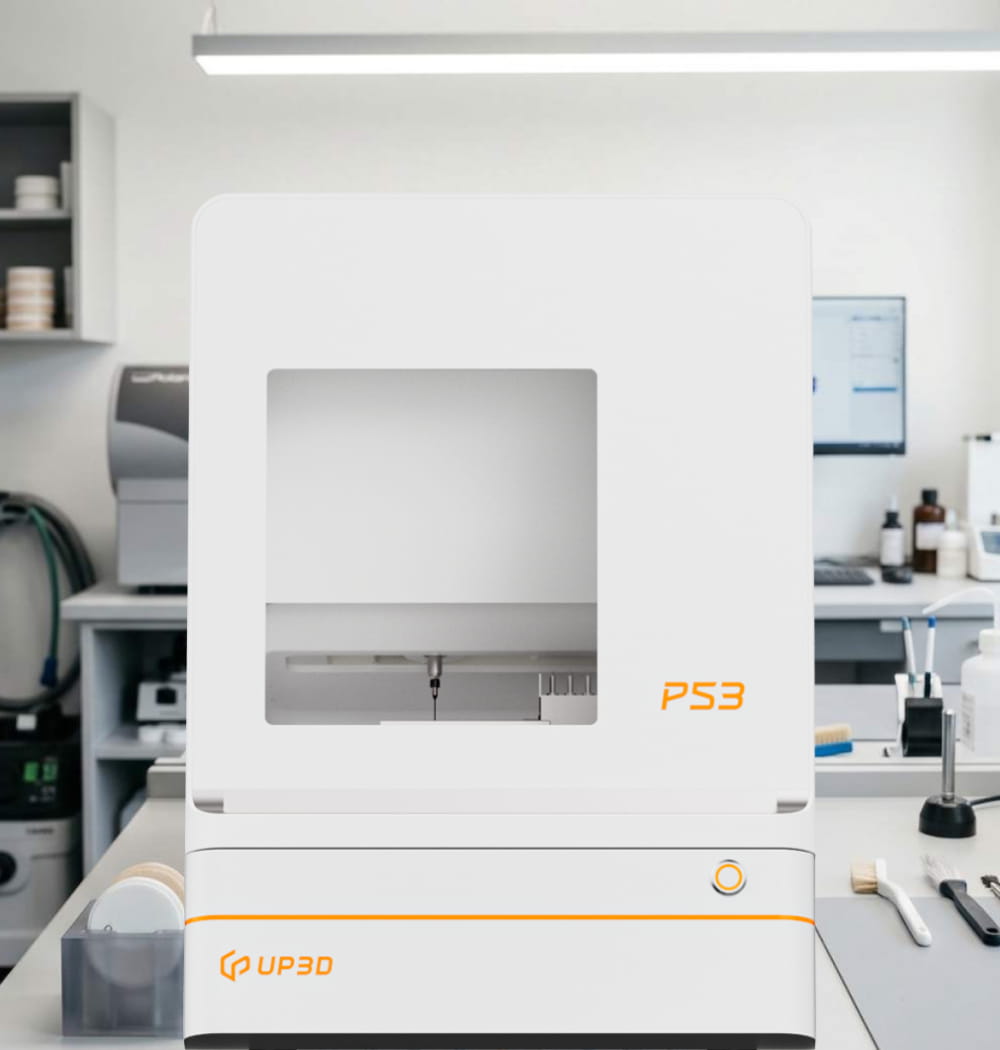
If you just picked up an UP3D P53 milling machine — or you're considering one — the first question that matters is which milling burs actually fit. The UP3D P53 is a compact 5-axis dry milling unit that's become popular in smaller dental labs for its price-to-performance ratio. But finding UP3D P53 compatible milling burs can be confusing, especially when the manufacturer's documentation is thin and aftermarket options aren't always clearly labeled.
Here's what I've learned from running one in the lab and talking to other techs who've done the same.
UP3D P53 Specs That Affect Bur Selection
Before you start shopping for burs, you need to know a few things about the P53's spindle and tool changer system.
Spindle and Collet
The P53 uses a 3mm shank collet system. This is standard for most compact 5-axis mills in this class. Spindle speed tops out around 60,000 RPM, which is adequate for zirconia, PMMA, wax, and most composites. It won't handle wet milling or sintered metals — this is a dry mill through and through.
Tool Changer Capacity
The tool magazine holds up to 16 positions, which is generous for a machine in this price range. Each tool slot accepts burs with a 3mm shank and overall lengths that fit within the machine's Z-axis clearance. Stick to burs under 50mm total length and you'll be fine.
CAM Software Compatibility
The P53 ships with UP3D's own CAM software, but many users run it with hyperDENT or Millbox. Your CAM software needs to know the bur geometry — flute diameter, effective cutting length, neck taper — so always check that your bur library entries match the physical tools you're loading.
Compatible Bur Types by Material
Here's the breakdown of what works, organized by what you're cutting.
Zirconia Burs
For pre-sintered zirconia (which is 90% of what labs run on machines like this), you want diamond-coated carbide burs. Two-flute designs work well at the P53's spindle speed. You'll typically need:
- 2.0mm end mill — roughing, general contouring
- 1.0mm end mill — fine detail, margin finishing
- 0.6mm end mill — ultra-fine detail work, thin walls
- Conical bur (0.6mm tip) — occlusal detail, undercuts
A solid 4-bur zirconia bur set covers most crown and bridge work. If you're milling full-arch implant bars, add a 3.0mm roughing bur to save time.
PMMA and Wax
Temporary restorations, provisional bridges, wax patterns. These are soft materials that need sharp, uncoated carbide burs. Single-flute or two-flute designs prevent material buildup and heat generation. The P53 handles PMMA and wax without breaking a sweat — just keep your feed rates reasonable so you don't melt the material.
Glass Ceramics and Hybrid Ceramics
Materials like VITA ENAMIC or Lava Ultimate fall into the glass ceramic / hybrid ceramic category. These require diamond-coated burs, similar to zirconia tooling but often with slightly different geometries optimized for the material's brittleness. If you're milling these regularly, read up on bur selection parameters for hybrid ceramics — the cutting strategy matters as much as the bur itself.
What About Metal?
Short answer: don't. The P53 is a dry mill without the spindle torque or coolant system for metal milling. Some techs have experimented with soft metals like CoCr pre-sintered blanks, but it's not what this machine was designed for. You'll burn through burs and stress the spindle.
The VHF K5 Connection
This comes up constantly in dental lab forums, so let's address it directly. Many technicians have noted that the UP3D P53 shares significant design similarities with the VHF K5. The tool holder system, collet dimensions, and overall machine architecture look very similar. Some forum posts go as far as calling the P53 a "K5 clone" or OEM variant.
I want to be clear: this is anecdotal information from user forums and tech discussions. I haven't seen official confirmation from either manufacturer. What I can say from practical experience is that burs designed for the VHF K5 — 3mm shank, same overall length specs — work in the P53 without modification.
So if you're looking for compatible burs and you see "VHF K5 compatible" on the listing, that's a strong indicator they'll fit your P53. Just verify the shank diameter and total length before ordering. The bur geometry (flute design, coating) should transfer directly since you're cutting the same materials at similar spindle speeds.
For more on whether aftermarket burs are worth it compared to OEM options, I wrote about OEM vs compatible milling burs — the short version is that quality aftermarket burs often match OEM performance at a fraction of the cost.
Recommended Bur Setup for the UP3D P53
If I were loading a P53 tool magazine from scratch for a general crown-and-bridge lab, here's what I'd put in:
The Essential 6
- 2.0mm diamond-coated end mill — zirconia roughing, your workhorse
- 1.0mm diamond-coated end mill — zirconia finishing, margin work
- 0.6mm diamond-coated end mill — fine detail on zirconia
- 0.6mm conical diamond bur — occlusal anatomy, undercuts
- 2.0mm uncoated carbide end mill — PMMA roughing
- 1.0mm uncoated carbide end mill — PMMA finishing
That covers zirconia and PMMA, which is what most labs mill 80% of the time.
Expanding the Magazine
With 16 slots available, you've got room to grow:
- Add a 3.0mm rougher for full-arch cases
- Dedicated wax burs if you do a lot of casting patterns
- Glass ceramic / hybrid ceramic specific burs if those materials are in your rotation
- Keep one or two backup burs for your most-used sizes — nothing worse than a bur breaking mid-case with no replacement ready
Maintenance Tips for P53 Burs
Burs are consumables, but how fast you go through them depends entirely on how you treat them.
Know When to Replace
A dull bur doesn't just produce rough margins — it puts extra load on the spindle and can crack your workpiece. Watch for increased milling noise, visible chipping on margins, or longer cycle times. Your CAM software may not warn you, so develop a habit of inspecting burs under magnification every 20-30 units. For a deeper look at wear patterns, check out the signs it's time to replace your milling burs.
Storage and Handling
Diamond-coated burs are tough but not indestructible. Don't toss them loose in a drawer. Use the foam-lined cases they come in, or a dedicated bur organizer. Keep them dry. And for the love of all things dental, don't drop them on a tile floor — the cutting edge will chip even if it looks fine to the naked eye.
Cleaning Between Uses
Zirconia dust accumulates in flute channels and reduces cutting efficiency. A quick blast with compressed air after each job goes a long way. For stubborn buildup, an ultrasonic bath works. Don't use wire brushes on diamond-coated surfaces — you'll strip the coating faster than normal wear would.
Frequently Asked Questions
What shank size do UP3D P53 milling burs use?
The UP3D P53 uses 3mm shank burs. This is the standard shank diameter for compact 5-axis dental milling machines in this class, shared by the VHF K5 and several other similar units.
Can I use VHF K5 burs in my UP3D P53?
Yes, based on widespread user reports. Burs designed for the VHF K5 with 3mm shanks fit the P53 tool holder without modification. The collet system and dimensional specs are functionally identical, though this hasn't been officially confirmed by either manufacturer.
How many burs does the UP3D P53 tool changer hold?
The P53 tool magazine holds 16 burs. For most general crown-and-bridge workflows, you can comfortably run with 6-8 burs and still have room for specialty tools or backups.
Can the UP3D P53 mill metal?
No, the P53 is a dry milling machine without the coolant system or spindle torque needed for metal milling. Stick to pre-sintered zirconia, PMMA, wax, and hybrid ceramics — the materials this machine was actually designed to handle.
How often should I replace milling burs on the P53?
Most diamond-coated zirconia burs last 50-100 units depending on material hardness and your milling parameters. PMMA burs tend to last longer since the material is softer. Inspect burs under magnification every 20-30 units and replace at the first sign of visible wear or chipping.