
Roland DWX-42W Rough Milling Bur Troubleshooting: ATC Maintenance Guide
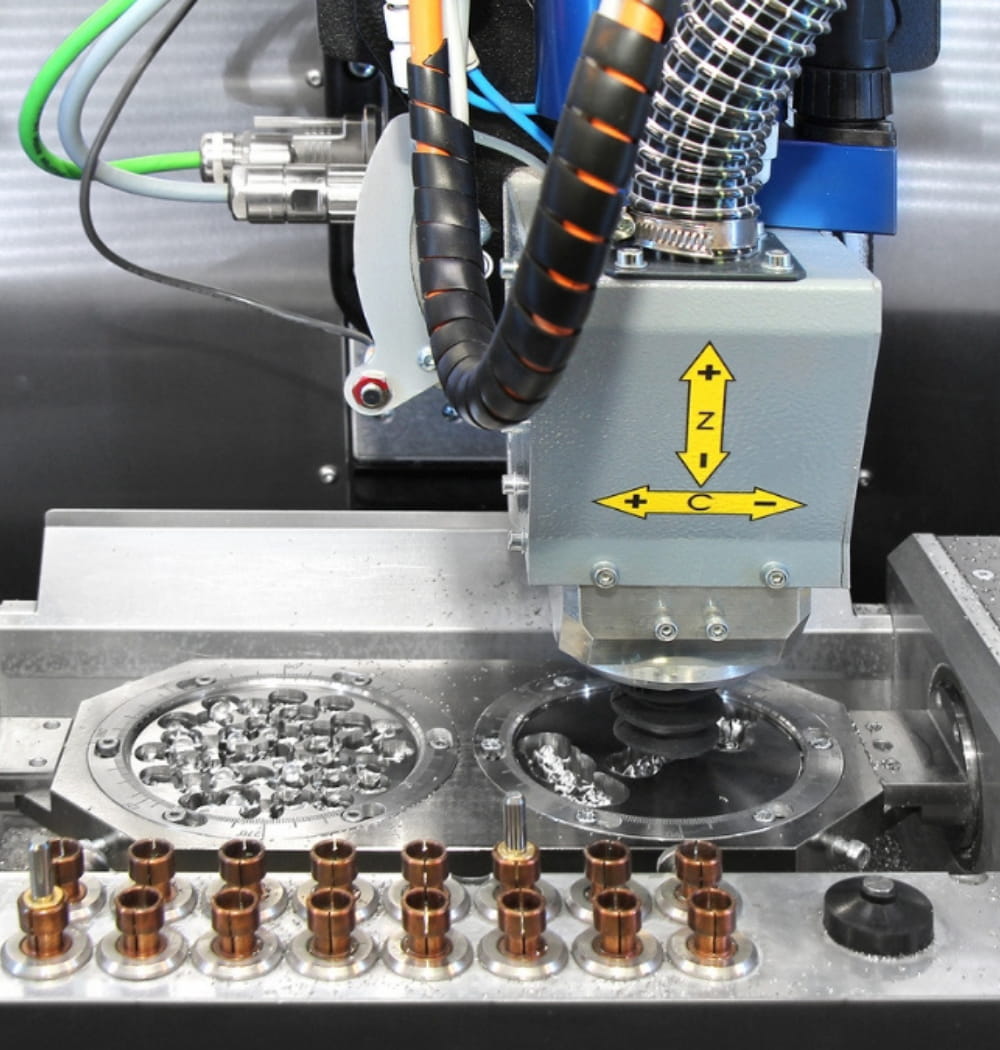
The Roland DWX-42W is a reliable wet mill. It handles glass ceramics, zirconia, and composites with the kind of precision that keeps small-to-medium labs running smooth. But the ATC (Automatic Tool Changer) magazine has a weakness that shows up after a few months of heavy use: debris accumulation from milled materials — particularly e.max and other glass ceramics — builds up inside the tool positions and starts causing problems that look like bur failures but are actually maintenance issues.
This guide covers the most common rough milling bur problems on the DWX-42W, with a focus on ATC debris buildup, diagnosis, and prevention. If your 42W is dropping tools, misreading positions, or snapping roughing burs without obvious cause, start here.
The ATC Debris Problem: What Happens Inside the Magazine
The DWX-42W uses coolant during milling — that's its main advantage over the dry DWX-52D. Coolant washes chips away from the cutting zone, which is great for surface finish and bur life. The problem is where those chips go after washing.
On the 42W, the coolant drains through a filtration system, but fine particles — especially glass ceramic dust from e.max, VITA Suprinity, and similar materials — stay suspended in the coolant mist inside the milling chamber. Over time, this mist deposits a layer of ceramic slurry on every surface, including the ATC magazine.
The ATC magazine holds 6 tool positions. Each position has a spring-loaded collet or gripper that holds the bur shank in place during storage and releases it during tool changes. When ceramic slurry dries on these grippers, three things happen:
- Grip force increases. Dried ceramic acts like a fine abrasive paste around the shank. The spindle has to pull harder to extract the bur, which can damage the tool holder mechanism over time.
- Insertion misalignment. Buildup inside the position shifts the bur slightly off-center. When the spindle picks up a misaligned bur, the effective runout increases — even if the bur itself has perfect runout spec.
- Position detection fails. The 42W uses optical or mechanical sensors to verify tool presence. A layer of dried slurry on the sensor or reflector triggers false readings — the machine thinks a position is empty when it's full, or occupied when it's empty.
Symptoms: How ATC Debris Shows Up as "Bur Problems"
Lab owners often blame the bur when the real issue is the ATC. Here are the symptoms that point to debris rather than bur quality:
Rough bur breaks during first engagement
The roughing bur snaps within the first 30 seconds of a milling job. The bur is new. The material is standard pre-sintered zirconia or PMMA. This suggests the bur was picked up misaligned from a contaminated ATC position — the effective runout is so high that the first full engagement exceeds the bur's lateral load limit.
Inconsistent surface finish job-to-job
Same bur, same material, same CAM strategy — but surface finish varies between jobs. One crown comes out smooth, the next has chatter marks. This pattern indicates variable bur seating caused by inconsistent debris in the ATC positions. The bur seats slightly different each time it's picked up.
Tool change errors (E-series codes)
The 42W displays error codes when tool changes fail. Common ones related to ATC debris:
| Error | Meaning | Likely Debris Cause |
|---|---|---|
| Tool detection error | Machine can't verify tool in position | Sensor blocked by dried slurry |
| Tool change timeout | Spindle couldn't seat or release tool | Gripper mechanism sticking from debris |
| Position mismatch | Tool found in unexpected position | Misread caused by dirty sensor |
If these errors appear intermittently — not every job, but once every few days — debris is the leading suspect. A genuine mechanical failure would be consistent, not intermittent.
ATC Cleaning Procedure: Step by Step
Roland's manual covers basic cleaning, but it doesn't emphasize how frequently the ATC needs attention when milling glass ceramics. Here's a thorough cleaning procedure that takes about 15 minutes.
What you'll need
- Isopropyl alcohol (90%+) or the coolant manufacturer's recommended cleaning solution
- Cotton swabs (the rigid stick type, not soft-tip)
- Compressed air (low pressure — 15-20 PSI, not shop air at 90 PSI)
- Small nylon brush (toothbrush works)
- Lint-free wipes
Procedure
- Power off and open the chamber. Never clean the ATC with the machine powered on. Even in standby, a sensor trigger can initiate a tool change cycle.
- Remove all burs from the magazine. Note which bur was in which position — take a photo if needed. Set burs aside on a clean surface.
- Inspect each position visually. Look for white or gray crusty deposits around the gripper jaws and inside the position bore. Glass ceramic residue is white-gray. Zirconia residue is also white but finer. PMMA residue is translucent and gummy. Each requires slightly different cleaning.
- Clean each position with alcohol-dampened swabs. Insert the swab into the position and rotate to dissolve and lift dried residue. For glass ceramic buildup, you may need 2-3 swabs per position. Don't use metal tools to scrape — you'll score the gripper surfaces.
- Blow out each position with low-pressure air. Hold the nozzle 2-3 inches from the position. Short bursts, not a continuous blast. You're removing loosened particles, not trying to sandblast.
- Clean the sensor surfaces. Locate the tool detection sensor for each position (check your manual for exact location — it varies by production year). Wipe the sensor face with a lint-free wipe dampened with alcohol. Dried coolant film on the sensor is nearly invisible but enough to cause intermittent false readings.
- Clean the magazine body. Wipe down the entire magazine housing. Pay attention to the area where the magazine rotates — debris in the rotation track causes the magazine to index imprecisely.
- Test each position dry. Before reinstalling burs, power on the machine and run a manual tool change cycle for each position. Listen for smooth gripper action — any grinding or sticking means more cleaning is needed.
- Reinstall burs and verify. Place each bur back in its position. Run a detection cycle. All positions should read correctly on the first attempt.
Cleaning Schedule: Match It to Your Material Mix
One-size-fits-all maintenance intervals don't work for the 42W. The cleaning frequency depends entirely on what you're milling:
| Primary Material | ATC Cleaning Interval | Why |
|---|---|---|
| Glass ceramic (e.max, Suprinity) | Every 20-30 hours | Glass dust is the worst offender — fine, abrasive, and sticks to wet surfaces |
| Pre-sintered zirconia | Every 40-50 hours | Fine dust but less adhesive than glass ceramic. Still accumulates. |
| PMMA / composite | Every 60-80 hours | Produces gummy residue instead of abrasive dust. Less harmful but still clogs grippers. |
| Mixed materials | Every 25-35 hours | Worst case — different residue types combine into a hard-to-remove composite crud. |
If you're running heavy e.max volumes on the 42W, think of ATC cleaning as a weekly task. Not monthly. Weekly.
Rough Milling Bur Issues Beyond ATC Debris
Not every roughing bur problem is ATC-related. Here are the other common issues specific to the DWX-42W.
Coolant-related bur problems
The 42W's coolant system is its advantage and its maintenance burden. The coolant itself can cause bur issues:
- Coolant concentration too low. Under-concentrated coolant doesn't lubricate the cutting zone properly. The bur runs hotter, wears faster, and can cause thermal cracking in glass ceramics. Check concentration weekly with a refractometer — maintain the manufacturer's recommended range (typically 3-5%).
- Contaminated coolant. Coolant that hasn't been changed on schedule contains suspended particles that act as an abrasive slurry. Instead of protecting the bur, the coolant accelerates wear. Full coolant changes per manufacturer schedule — typically every 2-4 weeks for glass ceramic work.
- Clogged coolant nozzle. A partially blocked nozzle reduces coolant flow to the cutting zone. The bur overheats in spots while remaining cool in others, causing uneven wear and potential thermal shock fracture. Clean nozzles with a fine wire or compressed air during every ATC cleaning session.
Wet milling and bur selection
The 42W supports materials that the dry DWX-52D can't touch — primarily glass ceramics and fully sintered zirconia. But wet milling changes the optimal bur selection:
- Diamond-coated burs are essential for glass ceramic. Unlike PMMA (where diamond coating causes problems), glass ceramic demands diamond-coated or CVD diamond burs. The coolant keeps temperatures manageable while the diamond surface handles the abrasion. Carbide alone dulls too fast.
- Use coated carbide for zirconia roughing. TiAlN or AlCrN-coated carbide burs handle pre-sintered zirconia well in wet conditions. The coating provides heat resistance and reduces material adhesion. Uncoated carbide works but wears 30-40% faster in wet environments due to micro-corrosion from the coolant chemistry.
Preventive Maintenance Checklist for DWX-42W Roughing Performance
Keep this list near the machine. Run through it at the intervals specified:
| Task | Interval | Time Needed |
|---|---|---|
| Clean ATC magazine positions | 20-50 hours (by material) | 15 min |
| Check coolant concentration | Weekly | 2 min |
| Clean coolant nozzles | With ATC cleaning | 5 min |
| Full coolant change | Every 2-4 weeks | 30 min |
| Inspect bur shanks for scoring | Every bur change | 1 min |
| Clean coolant filter/strainer | Weekly | 10 min |
| Check spindle runout | Every 500 hours | 10 min (with indicator) |
| Replace ATC gripper springs | Annually or when grip weakens | Service call |
For a comprehensive machine maintenance guide that covers all Roland DWX models, see the full maintenance checklist.
Frequently Asked Questions
Can ATC debris actually damage the spindle?
Yes, indirectly. When debris causes a bur to seat off-center, the resulting runout creates asymmetric loads on the spindle bearings. Over months of running with contaminated ATC positions, spindle bearing life can decrease by 30-50%. A $15 cleaning supplies kit versus a $2,000+ spindle replacement — the math is straightforward.
How do I know if my bur broke from debris vs. material defect?
Check the break pattern. A bur that broke from excessive runout (debris-related) snaps at the neck with a clean fracture — the forces exceeded the bur's lateral limit. A bur that failed from material defect usually shows progressive wear first: chipped flutes, irregular cutting edges, or delaminated coating before final failure. If a new bur snaps on first use, it's almost always a seating or runout issue, not a defective bur.
Should I use the same burs in the DWX-42W as the DWX-52D?
Same bur types, different optimization. The 42W's wet environment means you can push diamond-coated burs harder on glass ceramics than you could in a hypothetical dry scenario. For PMMA milling, the 42W actually runs dry (coolant off), so PMMA bur selection is identical to the 52D. The shanks and diameters are compatible between both machines.
My 42W keeps throwing tool detection errors even after cleaning. What else could it be?
Three possibilities beyond debris: (1) The detection sensor itself is failing — sensors degrade over time, especially in the humid coolant environment. Contact Roland service for a sensor test. (2) A gripper spring has lost tension and isn't holding the bur firmly enough for detection. Springs are replaceable parts. (3) The magazine indexing motor is slightly off, positioning the magazine 0.5-1mm from where the sensor expects it. This requires a service calibration.
The DWX-42W is a capable wet mill that rewards labs who stay on top of its maintenance needs. Most "bur problems" on this machine trace back to the ATC magazine and coolant system — not the burs themselves. Clean the magazine regularly, maintain the coolant, and the 42W will run roughing passes as reliably as any mill in its class.