
Aidite Milling Burs: Compatible Bur Guide for AMD-500, AMM-520 Pro & CMM-600
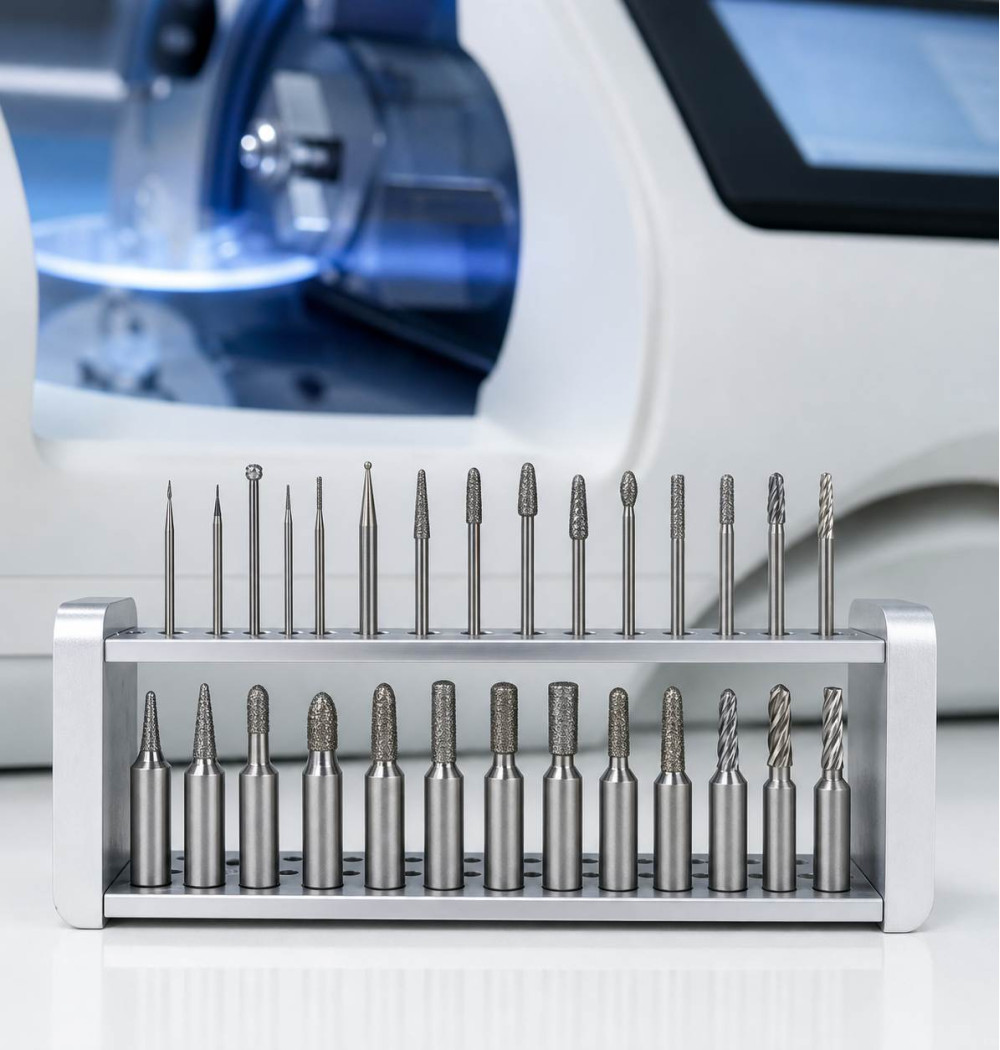
Aidite milling burs are easy to select once you separate the dry and wet machine lines. Miss that distinction, and the order is wrong before the box reaches your bench. Start with the machine, confirm the installed collet and tool magazine, then match the bur family to the material.
One Brand, Two Shank Sizes — Sort This Out First
Aidite’s dry zirconia line runs 4mm-shank burs. The wet glass ceramic and metal line runs 6mm. I’ve seen labs order the wrong shank twice in a row because someone matched the brand but never checked the actual machine. A 4mm bur won’t seat correctly in a 6mm collet, and a 6mm bur won’t go into a 4mm collet at all. The model names don’t help either — AMD, AMM, AMW, CMM all look the same on a purchase order.
| Machine | Bur shank | Bur family | Materials |
|---|---|---|---|
| AMD-500DC | 4mm | Dry zirconia | Pre-sintered zirconia |
| AMD-500E Pro | 4mm | Dry zirconia | Pre-sintered zirconia |
| AMM-580 | 6mm | Wet glass ceramic and metal | Lithium disilicate, titanium, CoCr |
| AMM-520 Pro | 6mm | Wet glass ceramic and metal | Lithium disilicate, titanium, CoCr |
| AMW-400S Pro | 6mm | Wet glass ceramic and metal | Lithium disilicate, titanium, CoCr |
| CMM-600 | Both — check your configuration | Dry zirconia or wet glass ceramic and metal | Verify the installed configuration and tool magazine |
The CMM-600 deserves extra attention because it shows up in both compatibility groups. Don’t guess from the model name. Check the collet, the tool magazine, and whatever tooling shipped with your machine before ordering.
Same discipline when you browse zirconia milling burs: shank first, then diameter. Diameter describes the working end — it tells you nothing about whether the shank fits your machine.
Zirconia Burs for the AMD-500DC and AMD-500E Pro
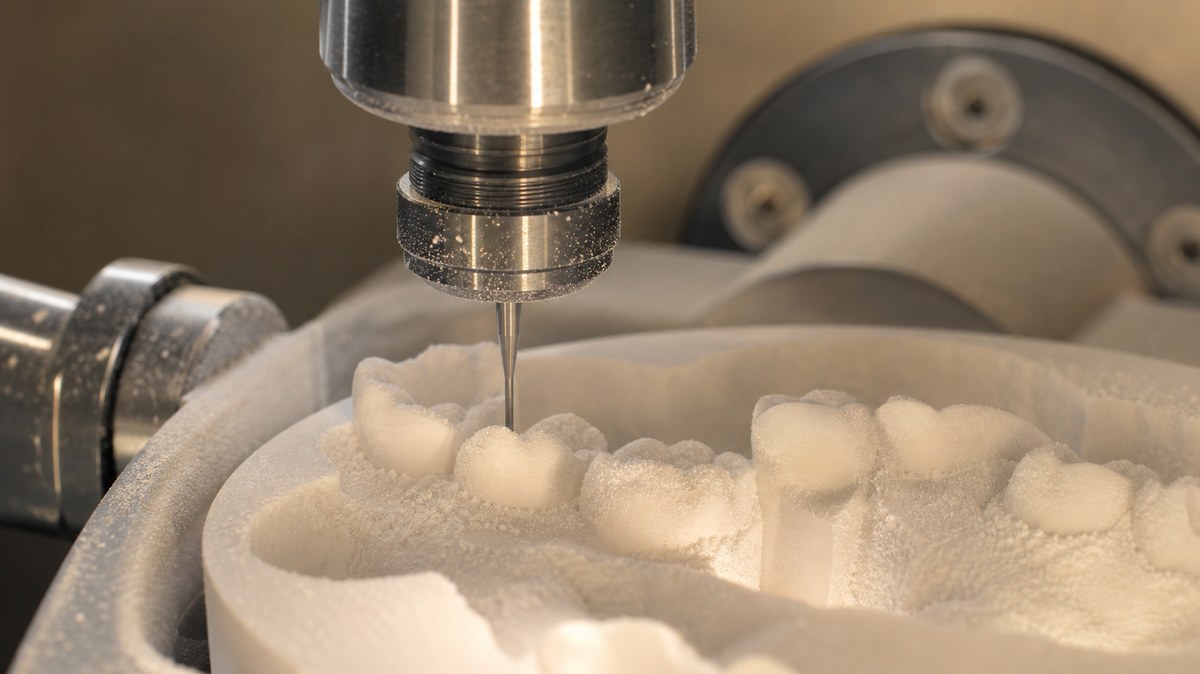
The standard dry strategy uses three 4mm-shank tools: Φ2.0mm, Φ1.0mm, and Φ0.6mm. These are the core AMD-500 burs, and each has one job. Making one diameter do everything costs you chipped margins, washed-out anatomy, or extra cycle time — usually all three.
- Φ2.0mm: Roughing and bulk removal. It clears most of the material and protects the smaller tools from doing heavy work.
- Φ1.0mm: Fine finishing and occlusal anatomy. It follows the roughing pass and develops the main surface form.
- Φ0.6mm: Fissure detail and margins. The tool for areas the larger diameters can’t reproduce cleanly.
Rough, finish, detail — in that order. The smaller bur should only refine what the larger bur already opened. If a Φ0.6 tool is being asked to remove real volume, the problem is the strategy or the tool, not the machine’s positioning.
For these dry machines, use 4mm-shank AMD-500 compatible zirconia burs. They’re made for pre-sintered zirconia blocks. Keep them physically separate from the wet-line tools, even when two tools share a similar working diameter.
When you need the L versions
Φ1.0L and Φ2.0L are the long-reach versions — Φ1.0L for finishing access, Φ2.0L for deep roughing. I pull them out when a standard tool can’t reach the geometry without the collet or holder crowding the restoration or the disc.
Typical cases: tall abutments, deep occlusal boxes on long-span bridges, and units nested deep in a tall disc where holder clearance gets tight. Extra length also means extra deflection, so don’t fill every position with L tools by default. If a standard tool reaches safely, run the standard tool.
If margins go fuzzy or fissures lose definition, look at the tool before blaming the spindle or calibration. Compare what you see against the visual signs a bur is worn. And confirm the right diameter sits in the expected magazine position — a good bur in the wrong slot produces a surprisingly convincing machine fault.
Glass Ceramic and Metal Burs for the Wet Line
The AMM-520 Pro, AMM-580, and AMW-400S Pro run 6mm-shank wet-line tools. Two different cutting systems live in this line: diamond-grit grinding tools for glass ceramic, and carbide burs for metal. Same shank. Not interchangeable.
Glass ceramic tools come in Φ0.6mm, Φ1.0mm, and Φ2.5mm. They’re diamond-grit grinders, not carbide cutters — they grind e.max and other lithium disilicate materials under coolant. Never run them dry. Coolant is part of the process, not a finishing preference.
The metal set is Φ1.0mm, Φ1.5mm, and Φ3.0mm carbide, for titanium and CoCr, also run wet. Match the tool type to the programmed material, not just the diameter. A Φ1.0 glass ceramic grinder and a Φ1.0 metal bur have completely different working surfaces and completely different jobs.
And don’t cross-use the dry zirconia carbides on glass ceramic. A zirconia tool is no substitute for a diamond-grit lithium disilicate grinder — and its 4mm shank is wrong for these machines anyway. Pick AMM-520 Pro compatible burs by material family first, then diameter.
If several technicians load tools, label the wet-line positions properly. “Small, medium, large” is not a labeling system. Material family, diameter, position. That habit is what keeps a metal carbide bur out of the slot where the CAM strategy expects a glass ceramic grinder.
OEM vs Compatible Burs on Aidite Machines
On compatible burs I look at three things: geometry match, shank tolerance, and coating or abrasive quality. The working geometry has to match the CAM tool definition. The shank has to locate consistently in the collet. The edge — carbide or diamond grit — has to wear predictably instead of trailing off into erratic finishes.
OEM list prices typically sit well above compatible tooling. At CADBURS, compatible Aidite-fit zirconia burs run about $22 each, glass ceramic tools about $23, and metal burs about $28. Price matters once several diameters sit in rotation across machines — but the cheapest bur is expensive the moment it creates remakes.
Test one material line before replacing the whole rack. Run the compatible zirconia set on representative work and compare scrap rate, margin quality, surface finish, and wear pattern against the OEM tools you already know. Keep the CAM strategy and material batch as constant as you can while you compare.
Same rule for the wet tools. Don’t change bur supplier, material, coolant routine, and CAM strategy all at once and then wonder which variable moved the finish. A controlled trial gives you evidence; a shotgun change gives you a mystery. This guide to OEM vs compatible milling burs covers the tradeoffs in more depth.
Frequently Asked Questions
What shank size do Aidite milling burs use?
Aidite milling burs use either a 4mm or 6mm shank, depending on the machine line. The AMD-500DC and AMD-500E Pro dry zirconia systems use 4mm burs, while the AMM-580, AMM-520 Pro, and AMW-400S Pro wet line uses 6mm burs; CMM-600 users must verify their configuration.
What does the "L" in Φ1.0L and Φ2.0L zirconia burs mean?
The “L” means long reach. These versions give extra access for tall abutments, deep areas on long-span bridges, and cases where a standard tool would bring the holder too close to the work.
Can I mill glass ceramic with zirconia burs on an Aidite machine?
No, zirconia burs should not be used to mill glass ceramic. Lithium disilicate needs the 6mm-shank diamond-grit glass ceramic tools and wet grinding under coolant.
How long do Aidite compatible zirconia burs last?
There is no fixed unit count that applies to every lab. A roughing bur in pre-sintered zirconia typically gets 100–300 units depending on strategy and material batch. Tool diameter, geometry, nesting density, and your own replacement standard all move that number.
Do compatible burs void an Aidite machine warranty?
Consumable tooling brand is normally the lab’s choice, and warranty terms cover the machine itself. Still, check the terms from your Aidite dealer and get any tooling restrictions or damage exclusions in writing rather than relying on a general assumption.
Most Aidite “machine problems” I get asked about turn out to be tooling problems — wrong shank ordered, wrong tool family loaded, or a bur running long past its life. Sort the 4mm-versus-6mm question first. After that, it’s just matching diameter to the job.