
VHF N4+ Compatible Milling Burs: Wet Milling Setup & Bur Selection Guide
The VHF N4+ Isn't a Smaller K5 — It's a Different Machine
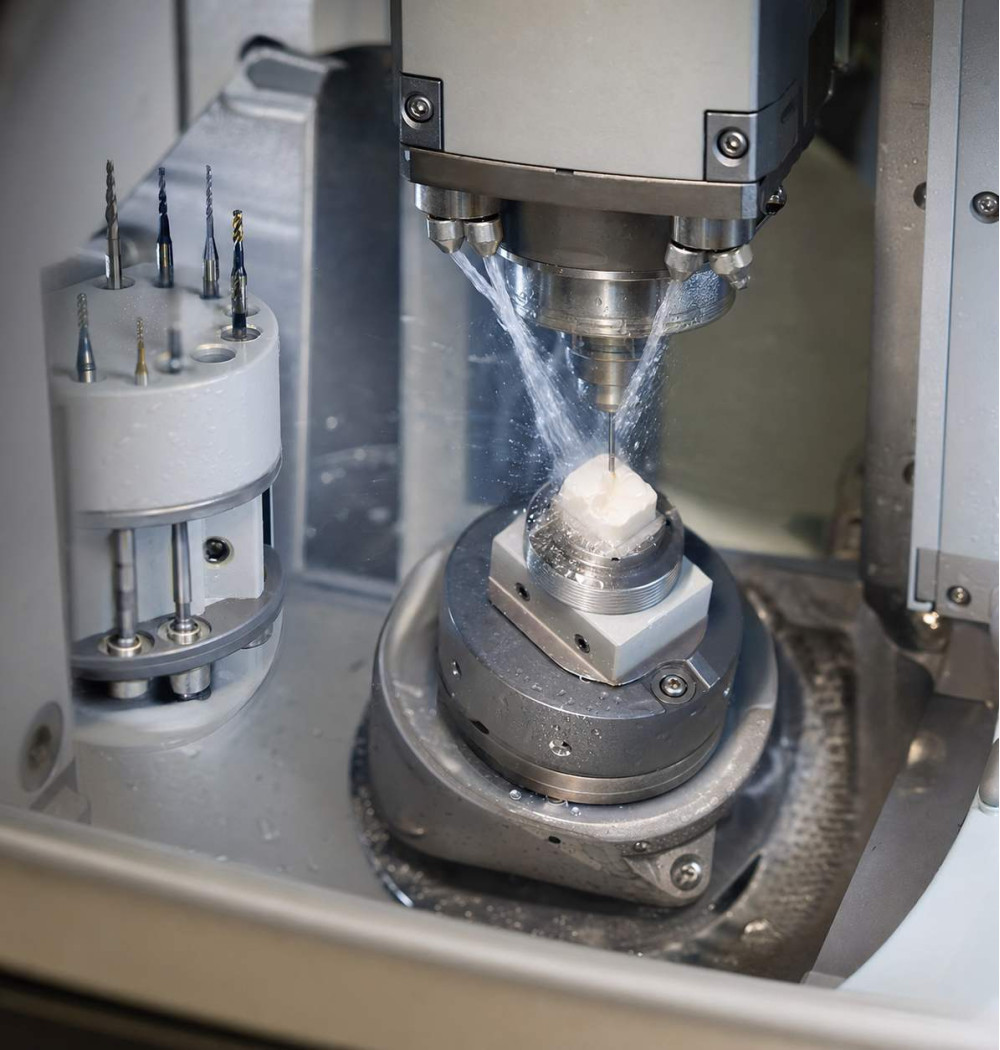
Labs that already run a VHF K5 sometimes assume the N4+ is just a compact version of the same thing. It isn't. The VHF N4+ is a 4-axis wet milling machine built around small blocks, not discs. Workspace tops out at 45 × 20 × 20mm per block, with an integrated water-cooled spindle running up to 60,000 RPM and eight fine nozzles aiming coolant directly at the cutting zone. The automatic tool changer holds eight tools, and the machine will run up to three 45mm blocks at once if you're batching single units overnight.
That block-format workspace is the whole story. No multilayer zirconia discs, no full-arch bridges. This is a single-unit and short-span machine: crowns, inlays, onlays, veneers, implant abutments. Materials-wise it covers glass ceramic (lithium disilicate, e.max), composite, zirconia blocks, and CoCr/titanium abutments — always wet, never dry. If your case list is heavy on bridgework, the N4+ on its own is the wrong tool. Plenty of labs pair it with a dry disc mill like the K5 for exactly that reason — small esthetic units on the N4+, frameworks and bridges on the disc machine, running in parallel instead of queuing everything through one spindle.
3mm Shank, Different Length — This Is Where Labs Get Burned
VHF standardized on a 3mm shank across most of the lineup, so K5, K5+, S1, S2, R5, S5, and N4+ all technically accept 3mm-shank tooling. Where it falls apart is total tool length. The N4+ collet is spec'd for a maximum 35mm total length. K5 burs run to 40mm. Same shank, same taper, wrong length — and a K5 bur dropped into an N4+ either won't seat correctly in the collet or ends up sitting proud enough to crash into the workholding on the first pass.
Don't buy on "3mm shank, VHF-compatible" alone. Check the total length is rated for your specific machine. This mix-up shows up more than it should, usually from a tech restocking in a hurry off a general VHF listing instead of the N4-specific one.
What's Actually in a Working N4+ Bur Kit
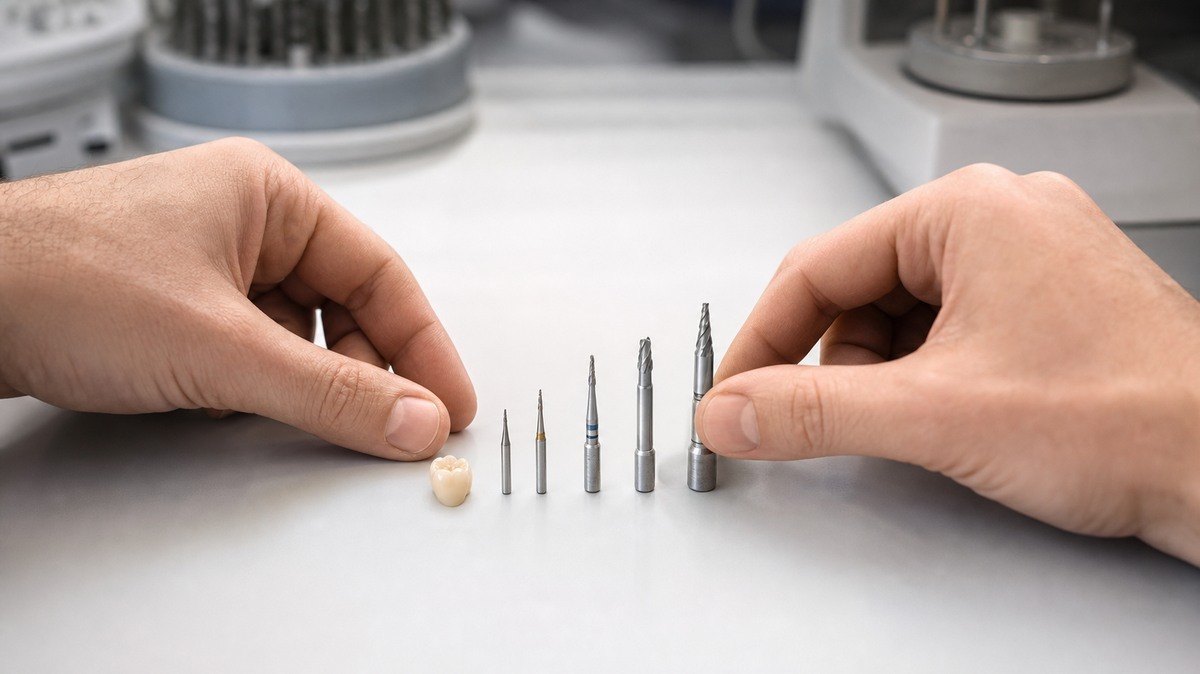
Because the N4+ leans heavily toward glass ceramic and esthetic work, the kit looks different from a zirconia-heavy disc mill setup.
Glass Ceramic / e.max
This is the machine's bread and butter. Three diameters cover nearly everything:
- 2.4mm textured-coated bur — bulk roughing on lithium disilicate blocks. Removes material fast without loading up with debris.
- 1.0mm textured-coated bur — general contouring, occlusal anatomy, most of the crown surface.
- 0.6mm textured-coated bur — margins and proximal contacts. Thin enough for tight interproximal areas on a three-unit inlay-retained bridge.
For a full rundown of e.max-specific bur selection and speed settings, the glass ceramic and e.max milling guide covers it in more depth than makes sense to repeat here.
Zirconia Blocks
The N4+ handles zirconia blocks fine, but the catalog situation is thinner — most zirconia tooling on the market is cut for K4/K5-length collets, not the shorter N4 spec. Confirm total length is 35mm or under before ordering, and don't assume a "VHF zirconia bur" fits your machine just because the shank matches.
CoCr and Titanium Abutments
Metal wears tools fast, full stop. Expect noticeably shorter tool life milling CoCr or titanium abutments on the N4+ compared to glass ceramic — plan on more frequent swaps and don't try to stretch a metal bur past its rated unit count just because it "still looks fine."
Wet Milling Parameters That Actually Matter
The 60,000 RPM ceiling gets marketed hard, but the detail that matters day-to-day is coolant delivery through those eight nozzles. Clogged or misaligned nozzles are a more common cause of uneven margins and premature bur wear than the tool itself. Check nozzle alignment before starting a batch, especially after a material change — residue from PMMA composite work can gum up a nozzle that then runs dry on the next zirconia block without anyone noticing until the surface finish goes bad.
Wet milling on glass ceramic genuinely does produce less microcracking than dry processing, which is part of why the N4+ exists as a dedicated wet machine rather than VHF just adding a coolant option to the K5. If you're running three blocks simultaneously overnight, stagger tool assignments across the batch rather than hammering one bur through all three — it evens out wear and keeps you from finding out mid-batch that your finishing bur quit on block two.
When the N4+ Alone Isn't Enough
Worth saying plainly: a lab buying only an N4+ and expecting it to cover bridgework and full-arch cases bought the wrong machine. The 45 × 20 × 20mm ceiling is a hard limit, not a soft recommendation. Labs that get the most out of this machine run it alongside a disc mill — N4+ for single units, abutments, and anything glass ceramic; the K5 or similar for frameworks, bridges, and anything needing a larger blank. Buying the N4+ to save money on a "does everything" machine usually means buying a second machine within a year anyway.
Frequently Asked Questions
Can I use VHF K5 burs in a VHF N4+?
No, not reliably. Both use a 3mm shank, but the K5 spec runs to 40mm total tool length while the N4+ collet maxes out at 35mm. A K5 bur in an N4+ either won't seat correctly or sits too proud and risks a crash on the first pass.
What materials can the VHF N4+ mill?
Glass ceramic (lithium disilicate/e.max), composite, zirconia blocks, and CoCr/titanium abutments — all wet-milled. It does not do dry milling; that's what the K-series and S-series handle.
How many blocks can the N4+ process at once?
Up to three 45mm-length blocks simultaneously, backed by an eight-tool automatic changer. That's enough for an unattended overnight run of single units if tool assignments are staggered across the batch.
Is the VHF N4+ good for bridges or full-arch cases?
Not on its own. The block size caps at 45 × 20 × 20mm, which rules out multilayer discs and larger spans. Labs doing both single units and bridgework typically pair the N4+ with a disc-based machine rather than expecting one machine to cover everything.
The N4+ does one job — small block, wet processing, esthetic materials — and does it well. Trying to make it do the disc mill's job is where labs run into trouble, not the machine itself.