
How to Extend Dental Milling Bur Lifespan: Maintenance & Best Practices
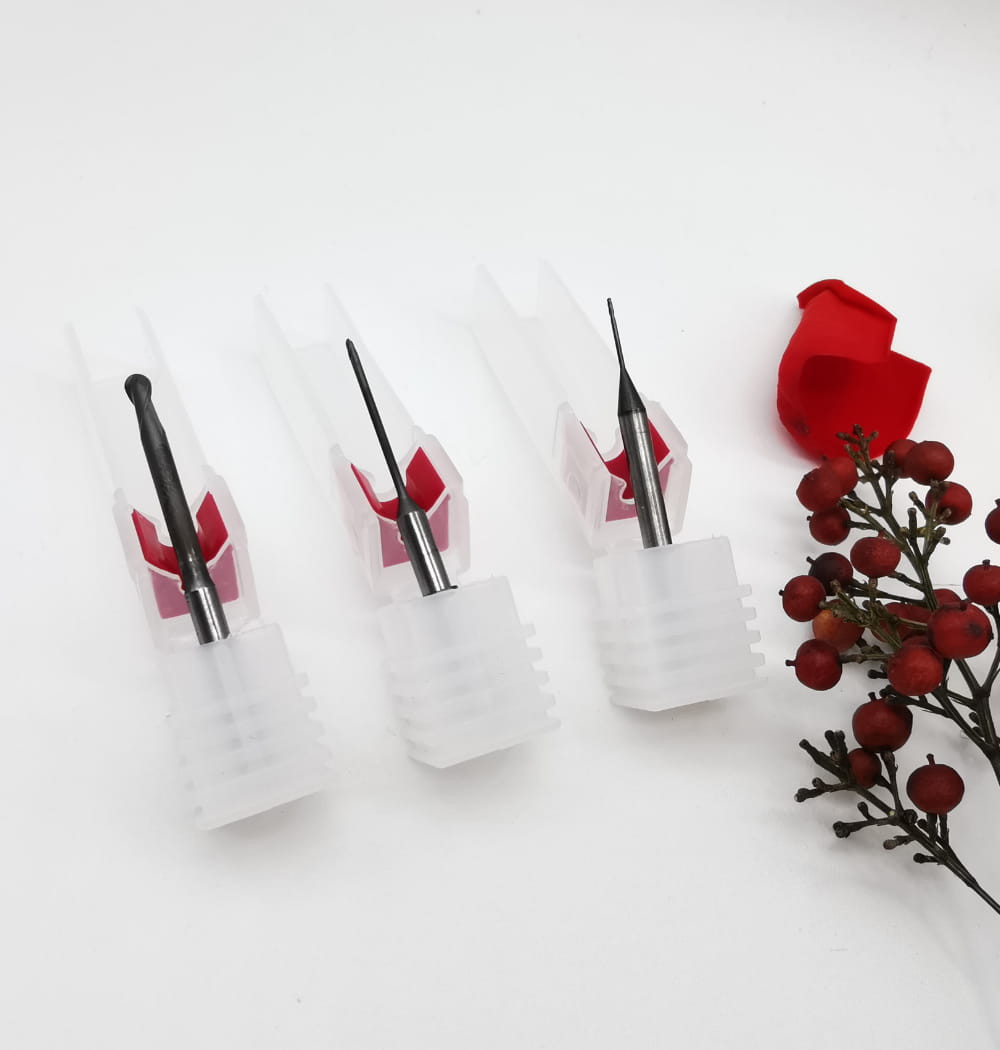
A $15 carbide bur that lasts 300 units versus one that dies at 80 — the difference is rarely the bur itself. I've seen labs burn through burs at triple the normal rate while the shop next door gets twice the expected life from the same product. After 15 years of running mills and troubleshooting premature bur failure, I can tell you: lifespan is about 80% technique and environment, 20% the bur you bought.
This isn't about babying your tools. It's about not throwing money away. A mid-size lab milling 40 units a day can easily spend $800–$1,200/month on burs. Cut that by even 30% and you're saving $3,000–$4,000 a year — real money that hits your bottom line.
The #1 Killer: Wrong Speed and Feed for the Material
Every material has a sweet spot. Run too fast in zirconia and you generate heat that micro-fractures the diamond coating. Run too slow in PMMA and the bur loads up with material, causing deflection and chipping. I see this constantly — a tech switches from milling zirconia to wax-up resin and doesn't change a single parameter. That's how you kill a bur in one session.
Here's the reference I keep taped to every mill in our lab:
| Material | RPM Range | Feed Rate (mm/min) | Expected Bur Life (units) |
|---|---|---|---|
| Pre-sintered Zirconia | 12,000–18,000 | 1,500–2,500 | 200–400 |
| Fully Sintered Zirconia | 40,000–60,000 | 300–800 | 20–50 |
| PMMA / Wax | 15,000–25,000 | 2,000–3,500 | 500–1,000+ |
| Glass Ceramic (e.max) | 30,000–50,000 | 500–1,200 | 30–80 |
| Cobalt-Chrome | 8,000–12,000 | 200–600 | 10–25 |
| Peek | 15,000–22,000 | 1,800–3,000 | 400–800 |
These numbers assume proper coolant, good collet condition, and a bur that isn't already worn. The ranges exist because every mill behaves a little differently — a Roland DWX-52D isn't a VHF S1. Start in the middle of the range and adjust based on what you hear and see. A clean, consistent cutting sound means you're in the zone. A high-pitched whine or chattering means something is wrong.
One practical tip: if your mill software lets you set separate roughing and finishing parameters, use them. Roughing at higher feed rates with a fresh bur, then finishing at reduced speed with a dedicated finishing bur, will extend the life of both. Trying to do everything with one bur at one setting is the fastest way to compromise both tool life and restoration quality.
Coolant: The Factor That Changes Everything
Wet milling with proper coolant extends zirconia milling burs life by 3–5x. That's not marketing — that's what I've measured across thousands of units. The coolant does three things: carries away heat, flushes chips out of the cut, and reduces friction on the bur's cutting surfaces. Remove any one of those and you're accelerating wear dramatically.
But here's where it gets nuanced:
- Pre-sintered zirconia: Wet milling is standard. Use the manufacturer's recommended coolant concentration — usually 3–5%. Going too dilute is almost as bad as running dry. Check concentration weekly with a refractometer; it takes 10 seconds.
- PMMA and wax: Mill these dry. Coolant causes PMMA milling burs to load up with gummy material that sticks to the flutes. The resulting buildup creates heat and vibration — the opposite of what you want. If your mill requires coolant for all operations, use the absolute minimum flow and blow the bur clean with air between operations.
- Glass ceramics: Wet milling is mandatory. These materials generate extreme heat at the cutting interface. Running glass ceramic burs dry will burn through the diamond coating in a handful of units. Keep coolant flow high and direct — make sure the nozzles are actually hitting the cutting zone, not just spraying the blank.
- Cobalt-chrome and titanium: Always wet, high coolant flow. These metals work-harden when they get hot, which means a dull bur gets duller exponentially faster. Flood coolant is your friend here.
One thing I check monthly: coolant nozzle alignment. Over time, vibration shifts nozzles a few millimeters off target. The coolant is flowing, the tank level looks fine, but it's not reaching the bur tip where it matters. Five minutes with an adjustment wrench can save you hundreds in premature bur replacement.
The Collet Nobody Checks
This is the silent bur killer. The collet holds your bur in the spindle, and if it's worn, contaminated, or damaged, the bur doesn't spin true. We're talking about runout — the wobble of the bur as it rotates. A healthy collet keeps runout under 0.005mm. Once runout exceeds 0.01mm, you're cutting bur life roughly in half. At 0.02mm, the bur is being hammered against the material thousands of times per second rather than cutting cleanly. It wears out fast and leaves terrible surface finish.
How to check runout:
- Use a dial test indicator (DTI) mounted to the mill table. Touch the indicator to the bur shank about 5mm from the collet. Rotate the spindle slowly by hand. Total indicator reading (TIR) should be under 0.01mm.
- No DTI? Watch for the symptoms: consistent chipping on one side of restorations, unusual vibration during cutting, or a bur that wears unevenly — flat on one side, sharp on the other.
How to fix it:
- Clean the collet. Remove it from the spindle and soak in isopropyl alcohol. Use a brass brush to clean the taper — never steel, which scores the surface. Debris as small as a grain of dust can cause measurable runout.
- Inspect for wear. Look for scoring, galling, or discoloration inside the collet bore. If the collet has visible wear marks, replace it. Collets are consumable items — budget $50–$100 per year for replacements depending on your machine.
- Check the spindle taper. If a new collet still shows high runout, the spindle taper itself may be damaged. This is a service call, but catching it early prevents you from wasting dozens of burs trying to figure out why everything is cutting poorly.
I recommend adding collet inspection to your Monday morning routine. Pull it out, clean it, check for wear, reinstall. Takes five minutes. Labs that do this consistently report 20–30% longer bur life across the board.
Storage and Handling: Damage Before the First Cut
Open a drawer in half the labs I visit, and I'll find burs loose in a tray, rattling against each other like spare change. Every time those cutting edges contact another hard surface — another bur, a metal tray, a tool — you risk micro-chipping. A diamond-coated bur with chipped coating doesn't just cut worse; the exposed substrate accelerates further coating loss. You start the job with a compromised tool and wonder why it didn't last.
What actually works for storage:
- Individual slots or foam inserts. Most bur manufacturers ship their tools in purpose-made holders. Keep them. If you've lost the original packaging, EVA foam with drilled holes works well — each bur gets its own slot, nothing touches.
- Label by usage count. A piece of masking tape on the holder with tick marks for every 50 units milled. Low-tech, completely effective. You'll know exactly when a bur is approaching end of life instead of guessing.
- Separate by material. A bur that's been milling zirconia has embedded ceramic particles on its surface. Using that same bur for PMMA transfers those particles and scratches the acrylic surface. Cross-contamination also accelerates wear.
- Handle by the shank only. Oils from your fingers don't damage the bur, but grabbing the cutting end invites slips that chip the edges. Make it a habit.
When to Retire a Bur: Reading the Signs
Running a bur past its useful life doesn't just waste material — it risks cracking a $30 zirconia blank or producing a restoration that fails in the mouth. Knowing when to stop is as important as knowing how to extend life. For a deeper dive, check out our article on 5 signs it's time to replace your burs. Here are the key indicators:
- Rainbow discoloration on the bur shaft. This is heat damage. The steel substrate has been tempered by excessive heat, which means the bur lost hardness. Once you see color change, the bur is done — continuing to use it accelerates wear exponentially.
- Rounded cutting edges. Hold the bur under magnification (10x loupe is enough) and compare to a new bur of the same type. Worn edges look rounded and reflective where they should be sharp and matte. On diamond-coated burs, you'll see smooth patches where the coating has worn away.
- Surface finish degradation on the workpiece. This is often the first sign you'll notice in practice. If the milled surface that used to come out smooth now shows visible tool marks, chatter lines, or rough patches, the bur is telling you something. Check the bur before blaming the CAM software.
- Increased milling time. Most mill software estimates job time. If a 4-unit bridge that used to take 22 minutes now takes 28, the bur is dull and the machine is compensating with more passes. Some machines won't compensate — they'll just push harder, increasing the risk of bur breakage.
- Chipping on the restoration. Especially on thin margins and connector areas. A sharp bur slices cleanly; a dull bur pushes material rather than cutting it, creating micro-fractures that show up as chips during or after milling.
Cost-Per-Unit Math: The Number That Actually Matters
Bur price means nothing without context. What matters is cost per milled unit. Here's a real comparison I tracked in our lab last year:
| Metric | Budget Bur | Premium Bur |
|---|---|---|
| Purchase price | $8.50 | $18.00 |
| Units milled (pre-sintered zirconia) | 90 | 320 |
| Cost per unit | $0.094 | $0.056 |
| Monthly volume (800 units) | $75.20/month | $44.80/month |
| Annual cost | $902 | $538 |
| Annual savings | — | $364 |
The premium bur costs more than twice as much but delivers nearly 40% lower cost per unit. Over a year, that's $364 in savings on a single bur position. Most mills run 4–6 bur positions per job — multiply accordingly.
How to track this in your lab:
- Start a simple spreadsheet: bur type, purchase date, unit count at install, unit count at retirement.
- Calculate cost per unit for every bur you retire. After 3 months, you'll have enough data to make informed purchasing decisions.
- Factor in material waste. A dull bur that cracks one zirconia blank per month just added $25–$40 to your effective bur cost. Track failed mills alongside bur changes.
Understanding your actual consumption patterns across different dental milling materials is the foundation of smart purchasing. If you're milling mostly zirconia, our zirconia milling guide covers material-specific optimization in detail.
Putting It All Together
Bur lifespan isn't one thing — it's the compound effect of getting several things right simultaneously. Correct speed and feed for the material. Proper coolant where it belongs. A clean collet with minimal runout. Sensible storage. And the discipline to retire burs based on evidence, not hope. None of these practices are difficult. Most take less than five minutes. But together, they're the difference between a lab that spends $6,000 a year on burs and one that spends $3,500 for the same output. That $2,500 goes straight to your margin — or into better equipment, better materials, better pay for your team. The choice is yours, but the math is clear.