
Roland DWX-52D Milling Bur Replacement Guide: What Fits and What Lasts
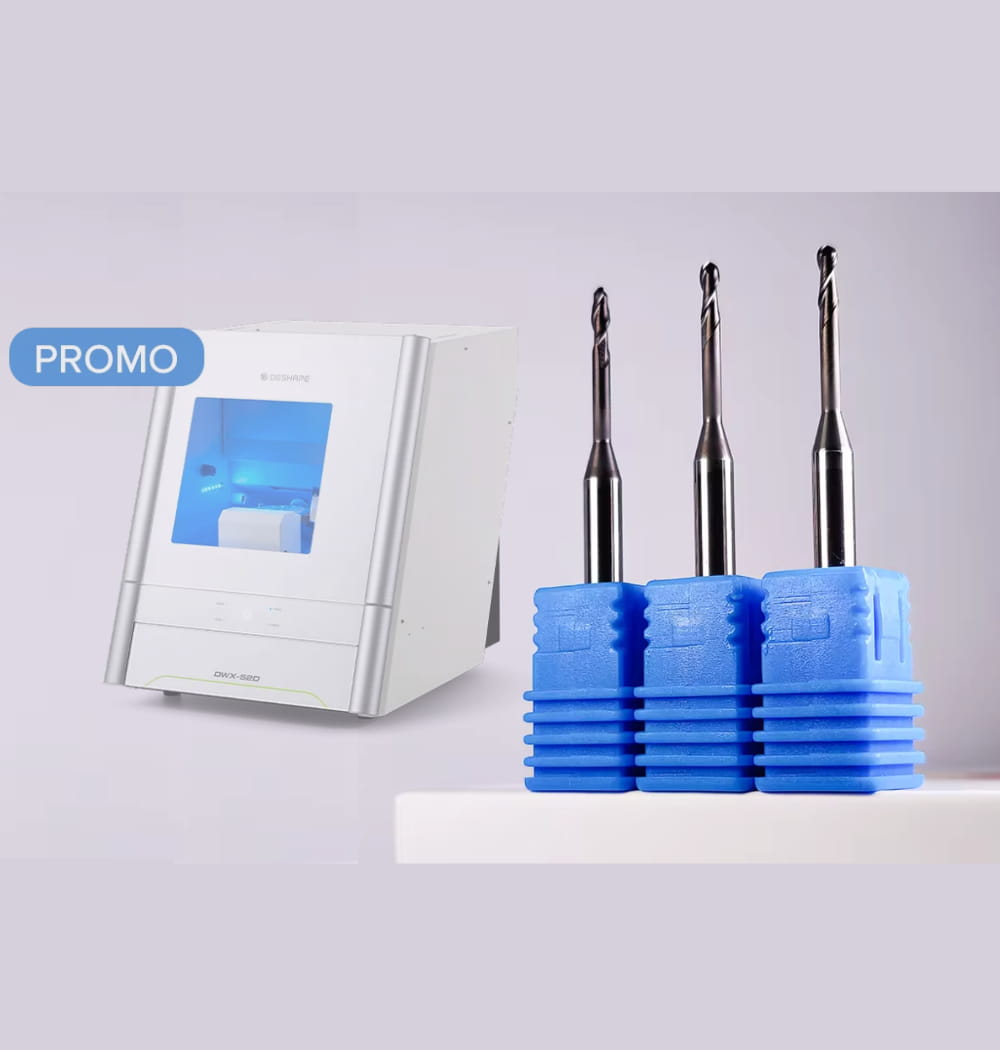
I've replaced hundreds of bur sets on the DWX-52D over the years. This guide is everything I wish someone had told me when I started.
DWX-52D Bur Specifications: What Actually Fits
The DWX-52D uses a 4mm shank diameter across all bur positions. This is standard for Roland's dental milling lineup and shared with the DWX-42W and DWX-52DC. If you're ordering burs, the 4mm shank is the first thing to verify — anything else won't fit the collet.
A typical DWX-52D setup runs 6 to 8 burs in the tool magazine:
- Pointed tapered bur (0.6mm tip) — for fine detail work, margins, and occlusal anatomy. This is the bur that wears fastest.
- Pointed tapered bur (1.0mm tip) — roughing and semi-finishing on smaller restorations.
- Flat end mill (1.0mm) — inside surfaces, flat floors, and intaglio finishing.
- Flat end mill (2.0mm) — bulk roughing. Takes off material fast.
- Radius end mill (0.6mm) — smooth concave surfaces, finishing passes on margins.
- Radius end mill (1.0mm) — general finishing, connector areas on bridges.
- Step drill / sprue cutter (2.0mm) — cuts the holding pins and sprues that connect the restoration to the blank.
The exact bur configuration depends on your CAM software strategy. Roland's default DWX-52D strategy in Millbox or SUM3D typically calls for 6 burs. If you're running a custom strategy in Hyperion or exocad, you might use 7 or 8.
OEM vs Compatible Burs: Where Your Money Goes
Roland OEM burs for the DWX-52D run about $30 to $50 per bur, depending on the type. A full set of 6 will cost you $200 to $300. That adds up fast when you're replacing burs every few weeks.
Compatible third-party burs — like the ones we sell for the DWX-52D — typically cost $8 to $15 per bur. Same 4mm shank, same geometries, same coatings. A full set runs $50 to $90.
I wrote a detailed breakdown of the real-world differences in our OEM vs Compatible Milling Burs comparison. The short version: for most labs, compatible burs deliver 85-95% of OEM bur life at 25-30% of the cost. The math isn't close.
Where OEM burs might have a slight edge is in the very finest tip sizes — the 0.3mm and 0.6mm pointed burs where coating consistency matters most. For your 1.0mm and 2.0mm tools, compatible burs perform nearly identically.
How Often to Replace Burs
This is the question everyone asks, and the honest answer is: it depends on what you're milling.
Typical Bur Lifespan by Material
- Zirconia (pre-sintered): 400-600 units per bur set. Zirconia is abrasive but pre-sintered blanks are still relatively soft. The 0.6mm pointed bur will be the first to go.
- PMMA: 600-800 units. PMMA is softer on burs, but the chips can gum up flutes if your coolant isn't dialed in.
- Wax: 1000+ units. Wax barely wears burs at all. If you're only milling wax, you'll replace burs due to damage from crashes before wear.
- Glass ceramic (e-max CAD): 150-300 units. This is the hardest on burs by far. If you mill a lot of lithium disilicate, budget for frequent bur changes.
Signs It's Time to Replace
Don't wait for a bur to snap — that damages the spindle and can ruin an expensive blank. Watch for these signs:
- Rough margins: If your crown margins are starting to chip or show rough edges, the pointed bur is dull.
- Longer cycle times: CAM software compensates for dull burs by making more passes. If a crown that used to take 12 minutes now takes 16, your burs are worn.
- Visible wear on the tip: Pull the 0.6mm bur out and look at it under magnification. If the tip looks rounded or the flutes are visibly worn, replace it.
- Chatter or vibration: A dull bur chatters instead of cutting cleanly. You can hear the difference.
- Fit issues: If your restorations are consistently tight on the die, worn burs could be the cause — they can't cut the fine details of the intaglio surface accurately.
Tracking Bur Usage
Most labs don't track this well enough. The simplest method: put a piece of tape on the tool holder and make a tick mark for each unit milled. When you hit your target number (say 500 for zirconia), swap the whole set. Some CAM software also tracks tool usage automatically — check your settings.
Material-Specific Bur Recommendations
Zirconia Milling
For zirconia milling on the DWX-52D, diamond-coated burs are the standard. They handle the abrasiveness of zirconia and maintain edge sharpness longer than uncoated carbide. For high-volume zirconia labs doing 20+ units a day, look into CVD diamond-coated burs — they cost more upfront but can last 2-3 times longer than standard diamond coating.
One common mistake: using the same bur set for both zirconia and PMMA. Zirconia wears burs in a specific pattern that then creates problems when you switch to PMMA. Keep separate sets if you mill both materials regularly.
PMMA and Wax Milling
For PMMA and wax, standard carbide burs without diamond coating actually work better. Diamond coating can cause PMMA to heat up and gum onto the bur. Use sharp, uncoated carbide with good chip evacuation (look for burs with larger flute channels).
PMMA also benefits from single-flute burs in the larger sizes. The extra chip clearance reduces heat buildup and gives you a cleaner surface finish. This is especially true for temporary crowns and bridges where surface quality matters for patient comfort.
Glass Ceramics
Glass ceramic milling is the hardest on burs. If you're milling e.max on the DWX-52D, expect to replace burs 2-3 times more often than with zirconia. Diamond coating is mandatory here — uncoated carbide won't last a full day of glass ceramic milling.
Consider keeping a dedicated glass ceramic bur set. The wear patterns from glass ceramic are aggressive and will compromise the bur's ability to cut other materials cleanly.
Tips to Extend Bur Life on the DWX-52D
Coolant Is Everything
The DWX-52D uses an internal coolant system with a 2-liter tank. Check the coolant level daily — running low on coolant is the fastest way to burn through burs. Use the recommended coolant concentration (typically 5-8% cutting oil mixed with water). Too dilute and you get poor lubrication; too concentrated and the chips don't evacuate properly.
Change the coolant completely every 2 weeks, or weekly if you're running high volume. Old coolant grows bacteria that breaks down the cutting oil and reduces its effectiveness. Your burs will thank you.
RPM and Feed Rate Settings
The DWX-52D spindle runs up to 30,000 RPM. For zirconia, most strategies run between 18,000-25,000 RPM. Higher isn't always better — excessive RPM generates heat that degrades diamond coating faster.
If you're getting poor bur life, try reducing RPM by 10-15% and slowing the feed rate proportionally. The slightly longer cycle time is usually worth the extended bur life. A bur that lasts 20% longer because you dropped from 22,000 to 19,000 RPM saves more money than the extra 90 seconds per unit costs in labor.
Toolpath Strategy Matters
Your CAM software's toolpath strategy has a huge impact on bur life. A few things to look for, as we covered in our guide to reducing milling errors:
- Avoid full-width cuts: Toolpaths that plunge the bur into material at full width create massive side loads. Ramping or helical entry is much gentler on burs.
- Use roughing burs for roughing: Don't make your 0.6mm detail bur do heavy material removal. Let the 2.0mm flat end mill do the bulk work first.
- Consistent chip load: Modern CAM strategies maintain constant chip load even around corners. If your strategy doesn't do this, consider upgrading — the bur savings alone will pay for it.
Don't Ignore the Collet
The collet that holds the bur in the spindle wears out too. A worn collet lets the bur wobble slightly, which causes uneven wear and can lead to bur breakage. Inspect the collet every time you change burs. Replace it every 6 months, or sooner if you see scoring marks on the inside surface. A new collet costs $15-25 — cheap insurance against premature bur failure and spindle damage.
The Bottom Line
Bur replacement on the DWX-52D isn't complicated, but doing it right saves real money. Track your usage, match your burs to your materials, keep the coolant fresh, and don't overpay for OEM burs when compatible options perform just as well for most applications.
If you're looking for DWX-52D compatible burs, check our current selection. We stock all the standard configurations and can help you match the right set to your milling strategy.