
JINY Milling Machine Compatible Burs: Complete Guide
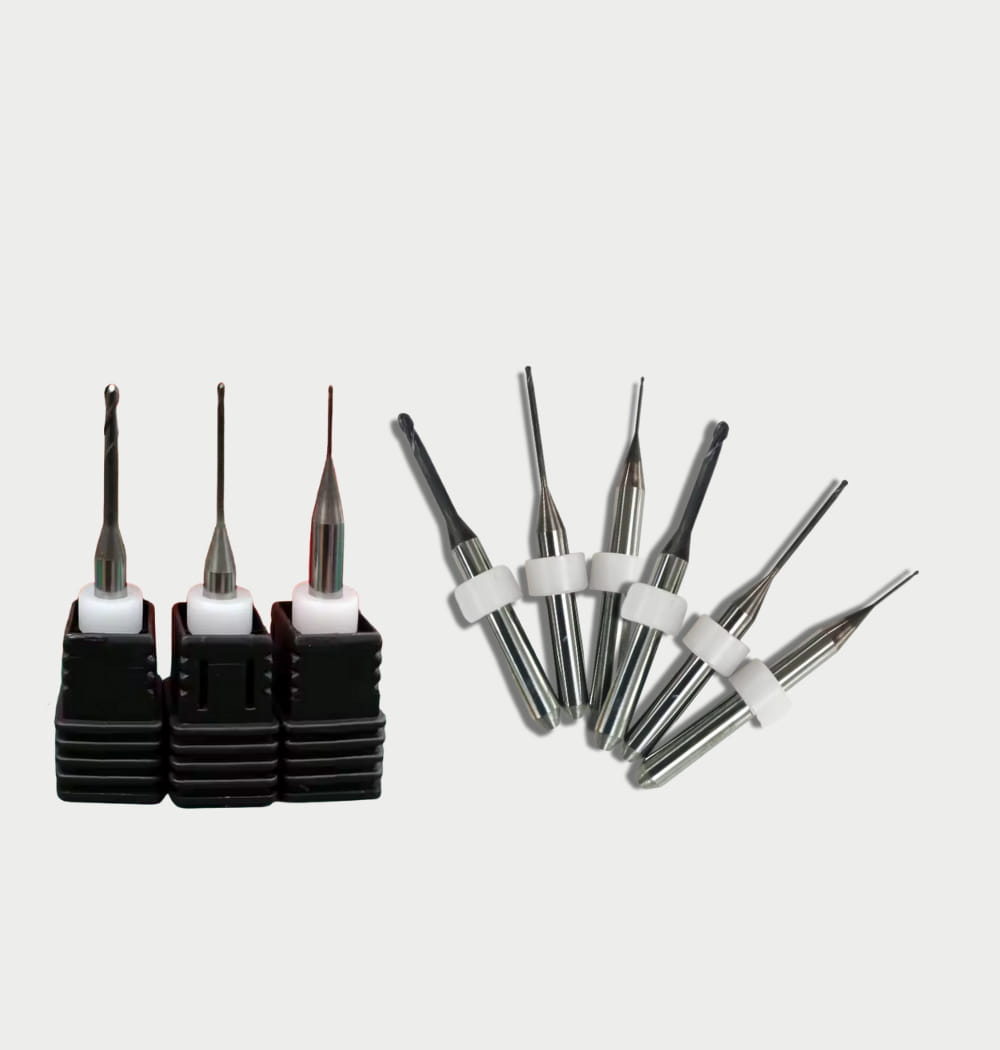
JINY Milling Machines: What You Need to Know
JINY makes several dental CAD/CAM milling machines, each targeting different materials and milling methods. The bur specifications vary across the lineup — wrong shank diameter or coating means spindle damage, ruined restorations, or burs that burn out in half the expected time.
Here's every current JINY model, the burs each one takes, and what to check when ordering replacements.
The JINY Machine Lineup
JINY machines fall into three categories: dry milling units for zirconia and soft materials, wet milling units for glass ceramics and metals, and wet/dry combo units that handle both. The main difference between models is the shank diameter — 6mm, 4mm, or 3.175mm — which determines what physically fits the collet.
| Machine Model | Shank Diameter | Milling Type | Materials |
|---|---|---|---|
| JDM5DW | 6mm (D6) | Wet & Dry | Zirconia, PMMA, Wax, Glass Ceramic, Metal |
| JDM5 MAX / JDM5T Pro / F5T Pro | 6mm (D6) | Wet | Glass Ceramic, Metal |
| JDM5Z | 4mm (D4) | Dry | Zirconia, PMMA, PEEK |
| JDM5Z Pro | 4mm (D4) | Dry | Zirconia, PMMA, Wax |
| JINY D3.175 | 3.175mm | Dry | Zirconia, PMMA, Wax |

Dry Milling Burs: Zirconia, PMMA, and Wax
The JDM5Z, JDM5Z Pro, D3.175, and the JDM5DW (in dry mode) all mill without coolant. Pre-sintered zirconia, PMMA, and wax generate less heat during cutting, so dry operation works fine. That said, zirconia is still abrasive enough to demand proper coatings on your burs.
Zirconia Burs
Milling zirconia requires diamond coated (DC) or diamond-like coated (DLC) burs. These coatings handle the abrasion that pre-sintered zirconia creates, extending tool life well beyond what uncoated carbide can deliver.
Tip geometries and sizes for JINY-compatible zirconia burs:
- Ball type: 0.6mm, 1.0mm, 2.0mm — contouring and detail work on crowns and bridges
- Flat type: 1.0mm, 1.5mm — flat surfaces, inlay floors, finishing passes
- Standard: 0.6mm, 1.0mm, 2.0mm — general-purpose roughing and finishing
The JDM5DW uses D6 shank burs with ball and flat type options. The JDM5Z and JDM5Z Pro take D4 shank burs. The D3.175 uses the smallest shank.
PMMA and Wax Burs
PMMA and wax are soft enough that hard coatings aren't needed. JINY-compatible PMMA/wax burs are uncoated carbide — cheaper and more than adequate. Available in 0.6mm, 1.0mm, and 2.0mm for the JDM5DW (D6 shank).
These burs last a long time. The main reason for replacement is edge chipping from accidental contact, not gradual wear.
Wet Milling Burs: Glass Ceramic and Metal
The JDM5 MAX, JDM5T Pro, F5T Pro, and the JDM5DW (in wet mode) handle harder materials that need coolant to prevent overheating. Glass ceramics like lithium disilicate and metal alloys both require specialized coatings and different tip geometries.
Glass Ceramic Burs
Glass ceramic burs use chromium nitride (CRN) or textured coatings (TC). These coatings handle the heat from cutting materials like IPS e.max while keeping edges sharp over many cycles.
Tip sizes: 0.6mm, 1.0mm, and 2.0mm. D6 shank for the JDM5DW, JDM5 MAX, JDM5T Pro, and F5T Pro.
Metal Milling Burs
Metal milling is the most demanding application. JINY-compatible metal burs use titanium silicon nitride (TiSiN) or CRN coatings to withstand the extreme heat and cutting forces of CoCr and titanium.
Metal burs come in the widest variety of geometries:
- Ball type: 0.5mm, 1.0mm, 2.0mm, 3.0mm — contouring and undercutting
- Ball nose: 2.0mm — smooth surface transitions
- Flat type: 1.0mm, 1.5mm, 2.0mm — planar surfaces and pocket floors
- Drill type: 1.5mm, 2.0mm, 2.5mm — screw channels and access holes
All metal burs use a 6mm shank — compatible with JDM5DW, JDM5 MAX, JDM5T Pro, and F5T Pro.
Picking the Right Bur: Three Things to Check
- Shank diameter. Match it to your machine. A D6 bur will not fit a D4 collet, and forcing the wrong size risks spindle damage.
- Coating for your material. Diamond coated for zirconia, uncoated for PMMA/wax, CRN for glass ceramics, TiSiN for metals. Wrong coating = poor surface finish and short tool life.
- Tip size. Match the diameter to your CAM software's tool library. Running a 1.0mm bur when the toolpath expects 0.6mm creates dimensional errors you'll catch at try-in.
Coating Reference
| Material | Coating | Why | Typical Life |
|---|---|---|---|
| Zirconia | Diamond Coated (DC) / DLC | Resists abrasion from pre-sintered zirconia | ~200-400 units |
| PMMA / Wax | Uncoated carbide | Soft materials, hard coatings unnecessary | 500+ units |
| Glass Ceramic | CRN / Textured (TC) | Heat resistance for wet milling ceramics | ~100-200 units |
| Metal (CoCr, Ti) | TiSiN / CRN | Extreme heat and wear resistance | ~50-150 units |
These numbers are ballpark. Actual tool life depends on milling parameters, coolant flow, material brand, and whether your CAM strategy uses climb or conventional milling. Here's how to tell when a bur needs replacing.
Frequently Asked Questions
Can I use the same D6 burs in both a JDM5DW and JDM5 MAX?
Yes — both use a 6mm shank, so the burs physically fit either machine. Just make sure the bur coating matches your material. Use diamond coated burs for zirconia (dry mode on the JDM5DW) and TiSiN/CRN burs for metals (wet mode on either machine).
What's the difference between DC and DLC coatings on zirconia burs?
DC (diamond coated) has diamond particles bonded to the surface for maximum hardness. DLC (diamond-like coating) is a smoother carbon film. DC lasts longer for heavy roughing; DLC gives a finer surface finish.
How do I know when to replace my JINY milling burs?
Increased milling noise, rough surfaces on restorations, visible edge chipping, or longer cycle times. White marks on zirconia restorations are another sign the bur has lost its edge.
Are compatible burs as good as JINY OEM burs?
Quality compatibles use the same carbide substrates and coating technologies. The key is matching shank tolerance, overall length, and coating spec to OEM requirements. Cheaper burs exist — whether they're worth it depends on how you value your time.
What makes the JDM5DW different from the JDM5 MAX?
The JDM5DW is a wet-and-dry combo machine (DW = Dry & Wet) that handles everything from zirconia to titanium. The JDM5 MAX is a dedicated wet milling machine optimized for metals and glass ceramics. Both use 6mm shank burs.