
Dental Milling Machine Maintenance: A Monthly Checklist That Prevents Downtime
Why Maintenance Gets Ignored
Milling machines run until they don't. Most labs only think about maintenance when something breaks — a spindle bearing starts screaming, a tool changer jams, or surface quality drops off a cliff. By then, you're looking at emergency repairs, downtime, and rushed outsourcing.
Preventive maintenance costs an hour a month. An unplanned breakdown costs a week.
Daily: 5 Minutes Before the First Job
- Coolant level: Check the reservoir. Low coolant means hot burs and rough surfaces. Top off with manufacturer-recommended concentrate — don't just add water.
- Debris tray: Empty it. Accumulated chips from yesterday can block coolant drains and cause flooding.
- Bur inspection: Check today's burs under a loupe. Visible wear, chipping, or coating loss? Swap them. A dull bur puts lateral stress on the spindle bearing. See our guide on reading bur wear signs.
- Collet check: Make sure the bur seats fully and runs true. A loose collet causes runout — rough margins and uneven surfaces.
Weekly: 30 Minutes on Friday Afternoon
Coolant System
Drain the reservoir completely. Wipe down the inside walls — biofilm builds up within a week and clogs nozzles. Refill with fresh coolant at the correct dilution (usually 1:20). Run a short cycle and watch each nozzle's spray pattern. Clogged nozzles create hot spots that ruin burs and materials. This matters especially for wet milling setups.
Tool Changer
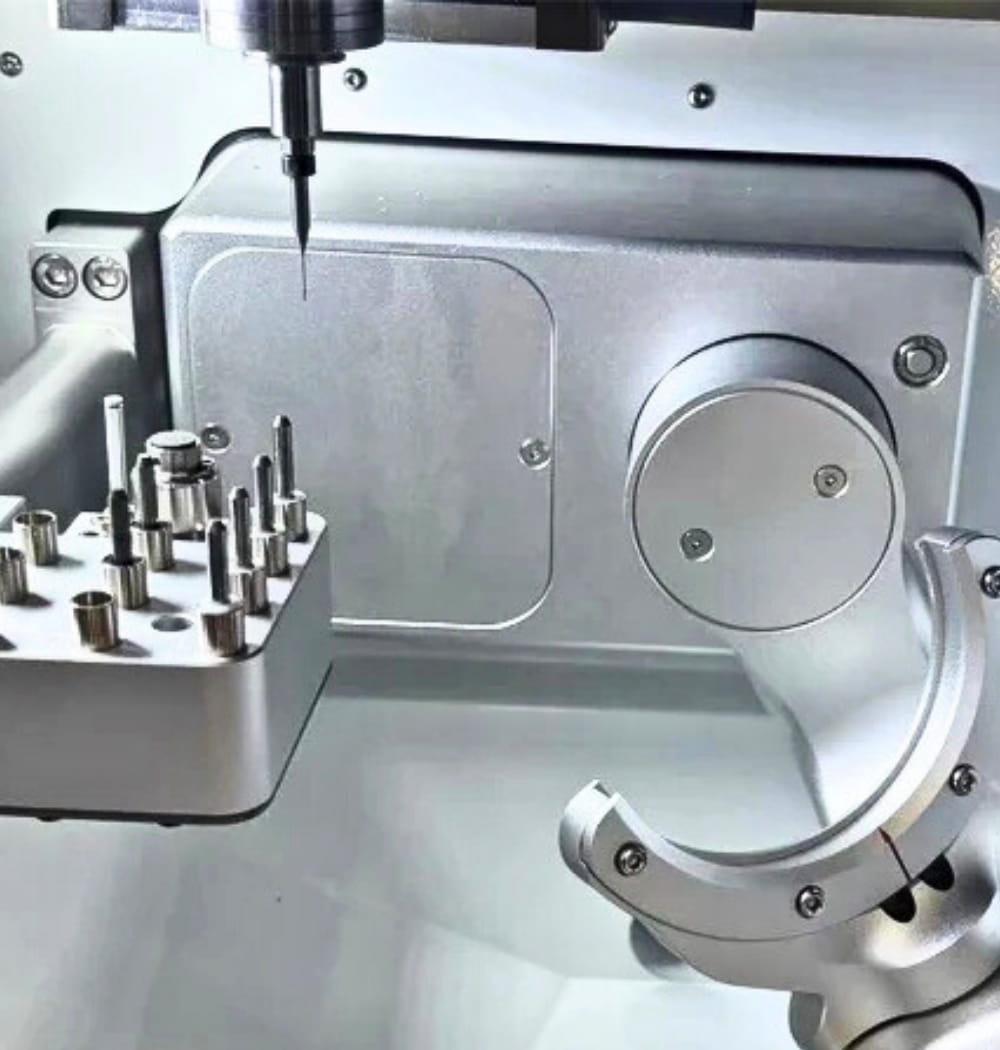
Run the tool change sequence manually 3-4 times with the door open. Watch for hesitation, misalignment, or grinding. Clean magazine slots with compressed air — dust causes misgrips. Check air pressure if your machine uses pneumatic tool change.
Way Covers and Bellows
Inspect the rubber or accordion covers protecting the linear rails. Zirconia dust is abrasive — if it gets past worn covers onto the guide rails, you lose positioning accuracy. Replace cracked or torn bellows immediately.
Monthly: The Deep Clean
Spindle Runout Check
Mount a test indicator in the collet and measure runout at the tip. Over 5 microns on a dental mill needs attention. 10+ microns means the spindle bearing is going — schedule replacement before it seizes.
Axis Calibration Verification
Mill a test disc or calibration block and measure with calipers. Compare actual dimensions to the CAD file. Off by more than 20 microns? Recalibrate. Most 5-axis machines have a built-in calibration routine.
Coolant Filter Replacement
Replace inline coolant filters monthly. A clogged filter reduces flow, which reduces cooling, which reduces bur life. Cheap filters cost $5-10. The burs they protect cost $30-80 each.
Electrical Connections
Check all visible cable connections — USB, Ethernet, power. Vibration loosens connectors over time. A flaky connection causes random errors mid-job, wasting material and time.
Quarterly: Full Service
| Task | DIY or Service Tech | Estimated Time |
|---|---|---|
| Spindle bearing assessment | Service tech | 1-2 hours |
| Linear rail lubrication | DIY (follow manual) | 30 minutes |
| Ball screw inspection | Service tech | 1 hour |
| Full software/firmware update | DIY | 30 minutes |
| Emergency stop and safety check | DIY | 10 minutes |
| Complete coolant system flush | DIY | 1 hour |
Linear rail lubrication is the one most labs skip. Dry rails increase friction, motor load, heat, and wear on everything. Use the grease type specified in your manual — not general-purpose shop grease.
Signs Your Machine Needs Attention Now
- Increasing noise during milling: Bearing wear. Check spindle runout immediately.
- Surface quality drops with new burs: Axis misalignment or excessive runout.
- Random mid-job errors: Electrical connections, overheating, or failing drive electronics.
- Tool changer dropping burs: Worn gripper or low air pressure.
- Coolant not reaching the cut zone: Clogged nozzles, failing pump, or kinked lines.
A well-maintained mill runs 5-7 years before major work. A neglected one lasts 2-3 — and cuts poorly for most of that time. The maintenance isn't glamorous, but the alternative is a $40,000 paperweight.