
Pre-Sintered vs Fully Sintered Zirconia: Bur Selection Guide
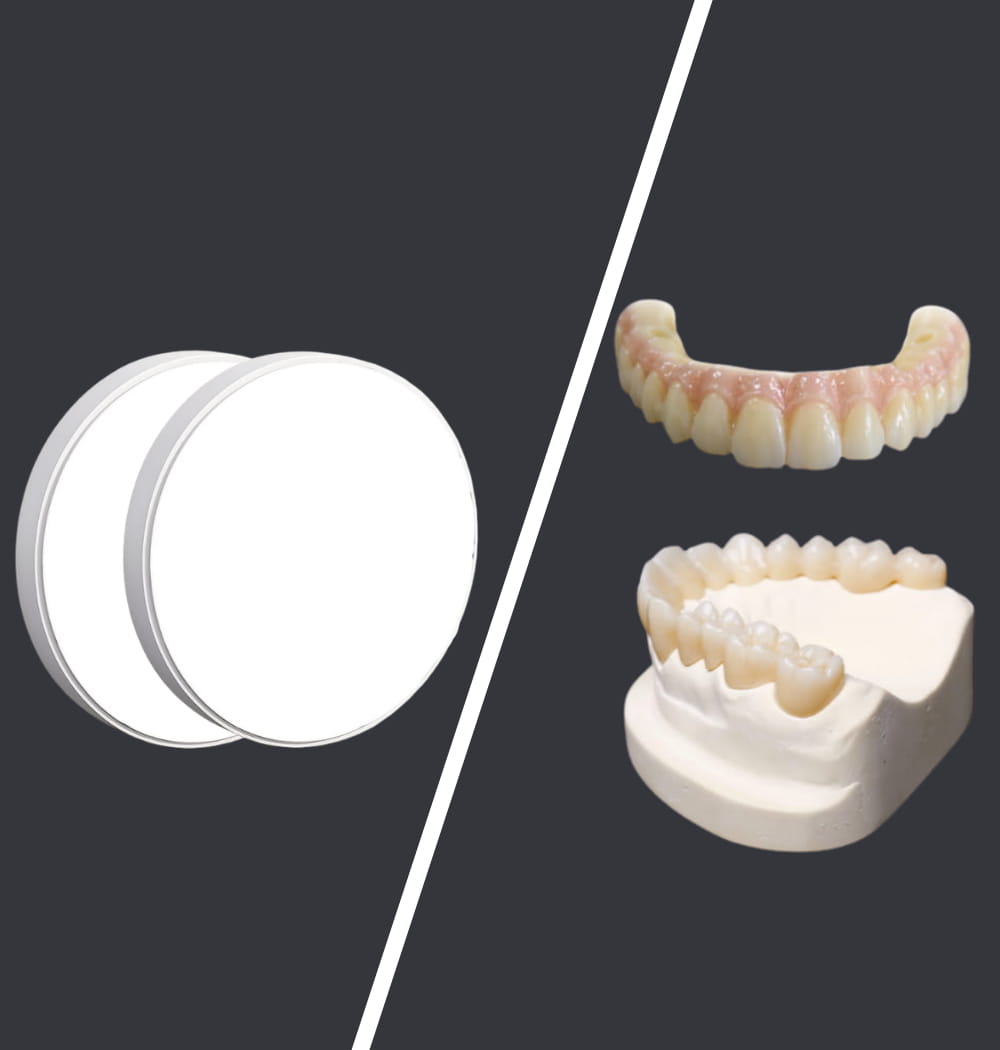
What's Actually Different: Pre-Sintered vs Fully Sintered Zirconia
Most dental labs mill pre-sintered zirconia. You rough it, finish it, then sinter it in a furnace at 1500°C for several hours. The disc comes chalky white, cuts almost like wax, and shrinks roughly 20-25% during sintering. Your CAM software compensates for the shrinkage automatically.
Fully sintered zirconia — sometimes called "pre-sintered to full density" or HIP zirconia — arrives already fired. No shrinkage. No sintering furnace needed. But it's brutally hard. We're talking 1200-1400 HV versus the 500-600 HV of a pre-sintered disc. That hardness difference changes everything about how you mill it and which burs survive the job.
Why Hardness Dictates Your Bur Choice
Pre-sintered zirconia at 500-600 HV is soft enough that a sharp carbide bur chews through it without breaking a sweat. Standard uncoated or DLC-coated carbide burs handle the job. You can run them dry (most labs do), and a single bur lasts 300-500 units if your parameters are dialed in. That's weeks of production from one tool.
Fully sintered zirconia at 1200-1400 HV will destroy a carbide bur in minutes. The material is harder than the cutting edge itself. You need diamond-coated burs — electroplated or sintered diamond grit that can actually abrade the surface rather than chip against it. Even with diamond tooling, expect 50-150 units per bur. The material just eats tools.
Bur Selection Comparison Table
| Property | Pre-Sintered Zirconia | Fully Sintered Zirconia |
|---|---|---|
| Hardness (HV) | ~500–600 | ~1200–1400 |
| Recommended Bur Type | Carbide (uncoated or DLC-coated) | Diamond-coated (electroplated or sintered) |
| RPM Range | 12,000–18,000 | 8,000–15,000 |
| Coolant | Dry or minimal air blast | Wet milling required (external or internal coolant) |
| Expected Tool Life | 300–500 units | 50–150 units |
| Shrinkage After Processing | ~20–25% (CAM software compensates) | None — mills to final dimension |
| Surface Finish Off-Mill | Good — polishes easily after sintering | Requires careful finishing; risk of micro-cracks if overheated |
Milling Parameters: Don't Just Swap the Bur
Switching from pre-sintered to fully sintered zirconia isn't just a bur change. The entire milling strategy shifts.
Pre-sintered: Higher RPM (12,000-18,000), aggressive feed rates, dry milling. The material is forgiving. Push the machine harder and it still produces clean margins. Most 4-axis and 5-axis machines handle this without any special configuration.
Fully sintered: Lower RPM (8,000-15,000), lighter stepover, mandatory coolant. You're grinding rather than cutting. Too much heat and the diamond coating delaminates — then you're grinding metal against ceramic and generating micro-cracks in the restoration. Those cracks cause failures months later in the patient's mouth. Not a callback you want.
If your machine doesn't have internal coolant channels, you'll need an external wet milling setup. Some older dry-only machines simply can't mill fully sintered zirconia reliably.
When to Use Each Material
Pre-Sintered Makes Sense When:
- You're producing single crowns, bridges, and standard prosthetics — the vast majority of lab work
- You have a sintering furnace and the 6-10 hour cycle time fits your workflow
- You want maximum tool life and lower per-unit bur cost
- You're milling monolithic or layered zirconia restorations where post-sintering adjustments are expected
Fully Sintered Makes Sense When:
- You need same-day restorations — no sintering wait time
- You're doing chairside milling and the patient is waiting
- Dimensional accuracy is critical and you don't want to rely on shrinkage compensation
- You have a machine with proper coolant delivery and diamond tooling budget
Cost Reality Check
Pre-sintered zirconia burs cost less upfront AND last 3-6x longer. At 300-500 units per bur versus 50-150, the per-unit tooling cost difference is dramatic. A carbide bur at $15-25 milling 400 units costs roughly $0.04-0.06 per unit. A diamond bur at $35-60 milling 100 units costs $0.35-0.60 per unit. That's a 6-10x difference in tooling cost alone.
Fully sintered discs themselves also cost more. So you're paying more for material AND burning through burs faster. The tradeoff is speed — no 8-hour sintering cycle.
For high-volume labs running 50+ units daily, pre-sintered is almost always the right call economically. For chairside practices doing 3-5 restorations per day, fully sintered might justify its cost through faster turnaround. Know your numbers.
Bur Wear Patterns Differ Too
With pre-sintered zirconia, carbide burs wear gradually. The cutting edges dull over hundreds of units. You'll notice surface finish degrading and milling times creeping up. Plenty of warning before failure. Check our guide on signs your milling bur needs replacing for the specific indicators.
Diamond burs on fully sintered material fail differently. The diamond coating can delaminate suddenly — one unit it's fine, the next you hear a grinding noise and the restoration is scrap. Inspect diamond burs under magnification every 20-30 units. Look for bare metal patches on the cutting surface. Replace at the first sign of coating loss, not after a failure.
Frequently Asked Questions
Can I use diamond burs on pre-sintered zirconia?
You can, but there's no reason to. Diamond burs cost 2-3x more than carbide and won't give you better results on soft pre-sintered material. Carbide burs actually produce a cleaner cut on pre-sintered zirconia because they slice rather than abrade. Save the diamond tooling for materials that need it.
Will fully sintered zirconia damage my dry milling machine?
It won't damage the machine itself, but without coolant you'll burn through diamond burs in 10-20 units instead of 50-150, and the heat buildup risks micro-cracking the restorations. Some dry-only machines lack the spindle rigidity for fully sintered material too. Check your machine specs — most manufacturers specify whether fully sintered zirconia is supported.
How do I know if my zirconia disc is pre-sintered or fully sintered?
Pre-sintered discs are chalky white (or lightly colored for multi-layer), opaque, and you can scratch the surface with a fingernail. Fully sintered discs are dense, translucent, heavy for their size, and you cannot scratch them. The manufacturer's spec sheet will list the sintering state, but the fingernail test works in a pinch.
What about partially sintered zirconia — is that a third category?
Some manufacturers sell "partially sintered" or "pre-sintered high-density" discs at around 800-950 HV. These fall between the two categories. Carbide burs can still handle them, but expect 30-50% shorter tool life compared to standard pre-sintered. Use DLC-coated carbide for the best results on partially sintered material, and consider reducing RPM by about 15-20%.
Do multi-layer zirconia discs affect bur selection?
Multi-layer zirconia discs with color gradients are pre-sintered. The layering doesn't change the hardness — each layer is the same HV, just different pigment concentration. Standard carbide burs work exactly the same across all layers. The color gradient develops during sintering, not during milling.