
CAD/CAM Milling Burs Guide: Choose the Right Bur for Your Machine
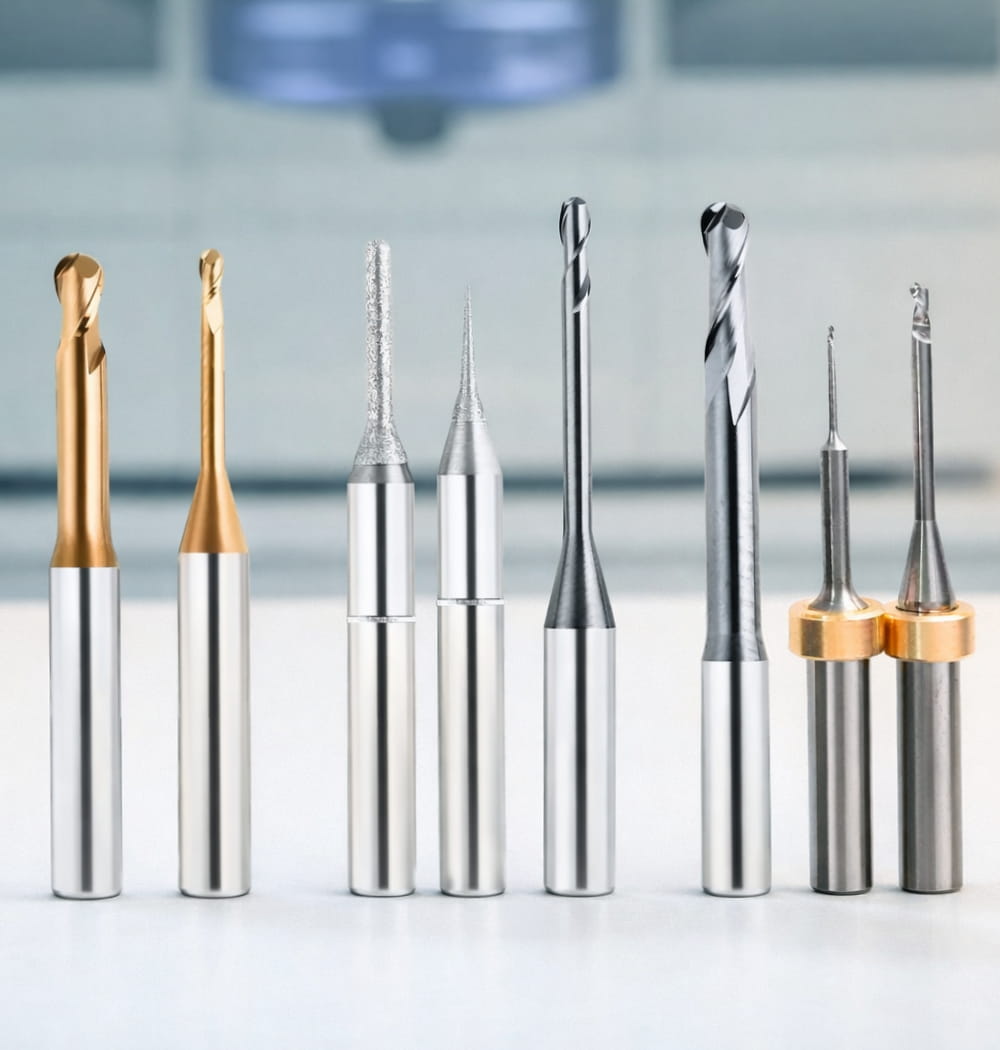
If you've spent any time running a dental mill, you already know that burs aren't just "small drill bits." They're precision cutting instruments engineered for tolerances that most machinists would find absurd — we're talking about achieving marginal fits under 50 microns on materials ranging from pre-sintered zirconia to fully crystallized lithium disilicate. Choosing the right burs for CAD/CAM systems directly affects surface finish, marginal integrity, restoration fit, and how often you're babysitting a mill instead of doing productive work.
This article covers the fundamentals: bur materials, geometries, material matching, and how to evaluate what you're buying. If you want to go deeper on any specific topic, I'll point you to the right place along the way.
What Makes Dental Milling Burs Different from Industrial Tooling
Industrial end mills and dental milling burs might look similar at first glance, but they live in different worlds. Three things set dental burs apart:
- Tolerances. A dental bur needs to hold dimensional accuracy within ±5 microns. Industrial CNC tooling is often spec'd at ±25 microns or looser. When your final restoration needs a 40-micron marginal gap, the tool itself can't eat up half that budget.
- Biocompatibility. Whatever coating or substrate the bur leaves behind as micro-debris ends up embedded in a restoration that goes into someone's mouth. This means no random coatings, no mystery alloys. Reputable bur manufacturers test for particulate contamination — cheap ones don't.
- Material-specific geometry. An industrial shop might use one end mill across aluminum, steel, and plastic with minor speed adjustments. In dental milling, you need fundamentally different flute designs, helix angles, and coatings for zirconia versus PMMA versus lithium disilicate. A bur optimized for roughing zirconia blocks will destroy a wax disc, and a wax bur will snap instantly in zirconia.
The shank tolerances matter too. Dental mills use collet systems with very little runout tolerance — typically under 3 microns. If the bur shank is even slightly out of spec, you get chatter, poor surface finish, and premature wear on both the bur and the spindle.
Bur Material Types: Carbide, Diamond-Coated, and CVD Diamond
Not all bur materials make sense for every application. Here's how to think about the three main tiers and when each one earns its price tag.
Solid Carbide (Tungsten Carbide)
This is your workhorse. Solid carbide burs handle PMMA, wax, composite resin, and PEEK without breaking a sweat. For pre-sintered zirconia — which is what most labs mill before sintering — carbide works well and offers the best cost per unit. You'll burn through them faster than diamond burs in hard ceramics, but for softer milling materials, carbide gives you clean cuts at a reasonable price.
Good carbide burs use ultra-fine grain tungsten carbide (0.2–0.5 μm grain size). Coarser grain means the cutting edge dulls faster and chips more easily. If a supplier won't tell you their grain size, that's a red flag.
Diamond-Coated Carbide
Take a solid carbide body and add a thin layer of polycrystalline diamond (PCD) coating — usually 8–15 microns thick. This is the sweet spot for labs milling a mix of zirconia and glass ceramics. The diamond layer dramatically extends tool life in abrasive materials while the carbide core provides toughness and rigidity.
The catch: coating quality varies wildly between manufacturers. A poorly bonded diamond coating delaminates mid-cut, leaving you with a bare carbide bur and a scrapped restoration. More on how to evaluate coating quality below.
CVD Diamond (Chemical Vapor Deposition)
CVD burs grow a thick diamond layer (50–100+ microns) directly onto the tool body through chemical vapor deposition. This isn't a coating that can peel — the diamond is structurally integral. CVD burs are the gold standard for high-volume zirconia milling and fully sintered ceramics.
The downside is cost. A CVD bur can run 3–5x the price of a diamond-coated equivalent. It makes financial sense when you're running multiple zirconia cases daily and the extended tool life (often 3–4x longer than diamond-coated) offsets the upfront cost. For a lab milling five zirconia crowns a week, diamond-coated carbide is probably the better value.
Bur Geometry: Flat End, Ball Nose, and Tapered Shapes
Bur geometry determines what the tool can do and how well it does it. Most dental mills use a combination of two or three geometries to complete a restoration.
Flat End Mill (Square End)
The flat end mill is your roughing tool. It removes bulk material quickly with its full-width cutting face. In a typical milling strategy, the flat end mill does 70–80% of the material removal. You'll see these in 1.0mm, 2.0mm, and sometimes 2.5mm diameters depending on the machine.
For roughing pre-sintered zirconia on machines like the Roland DWX-52D or Imes-Icore 350i, a 2.0mm flat carbide bur at the manufacturer's recommended RPM and feed rate is the standard starting point. Drop to 1.0mm for detail work in tight interproximal areas.
Ball End (Ball Nose)
Ball end burs handle concave surfaces, internal anatomy, and finishing passes. The hemispherical tip follows complex 3D contours that flat end mills can't reach — think the internal surface of a crown or the gingival embrasures on a bridge.
Common dental ball end sizes are 0.6mm, 1.0mm, and 2.0mm diameter. The 0.6mm gets into the fine anatomy but wears faster and is more fragile. For glass ceramic burs working on e.max or VITA Suprinity, a 1.0mm ball end with diamond coating handles finishing passes without chipping the margins.
Tapered (Conical)
Tapered burs handle angled surfaces and are especially useful for milling the axial walls of crowns and the emergence profile of abutments. The taper angle typically matches common preparation geometries — 1° to 3° per side is standard.
Some milling strategies use a tapered bur as a "semi-finishing" tool between the roughing flat end and the finishing ball end. This reduces the step-over marks that the ball end has to clean up, shortening total mill time.
Pointed Burs and Specialty Shapes
For titanium abutment milling and implant bar work, you'll sometimes see specialty geometries — drill-point end mills for plunge cutting, or radius end mills that split the difference between flat and ball. These are niche tools for specific workflows, not everyday essentials.
Material-to-Bur Matching Reference Table
This is the table I wish someone had handed me when I started. It covers the most common dental milling materials and what bur type works best for each.
| Material | Hardness | Recommended Bur | Milling Notes |
|---|---|---|---|
| Pre-sintered zirconia | Low-medium | Solid carbide (high-volume) or diamond-coated carbide | Mill dry. Carbide is cost-effective; diamond-coated lasts 2–3x longer. Use dedicated zirconia milling burs for best results. |
| Fully sintered zirconia | Very high | CVD diamond or high-quality diamond-coated | Mill wet. Extremely abrasive — expect shorter tool life. Only mill fully sintered if your workflow demands it. |
| Lithium disilicate (e.max) | High | Diamond-coated carbide or CVD diamond | Mill in blue state (partially crystallized). Fragile margins — use conservative feed rates and sharp burs only. |
| PMMA / Composite resin | Low | Solid carbide (single or dual flute) | Easy to mill. Main risk is heat buildup causing smearing. Use PMMA and wax burs with appropriate chip evacuation. |
| Wax | Very low | Solid carbide (single flute preferred) | Single flute prevents clogging. Low RPM, high feed rate. Cheap burs work fine here. |
| Titanium | High | AlTiN or TiAlN-coated carbide | Mill wet, always. Titanium work-hardens — dull burs cause immediate problems. Replace at first sign of wear. See our metal milling burs for options. |
| PEEK | Medium | Solid carbide (sharp, uncoated or polished flute) | Similar to PMMA. Heat is the enemy — PEEK softens and sticks to dull burs. |
| Chrome-cobalt | Very high | AlTiN-coated carbide or CVD diamond | Wet milling only. Hard on equipment. Many labs prefer sintering CrCo instead of milling it. |
| Hybrid / resin nano ceramics | Medium | Solid carbide or diamond-coated carbide | Moderate abrasion. Mills like a harder PMMA. Read the hybrid ceramic bur selection guide for specific parameters. |
For more detail on how your milling environment — wet coolant versus dry suction — affects bur life and material outcomes, see the full breakdown on wet vs dry milling.
How to Evaluate Milling Bur Quality Before You Buy
Price alone doesn't tell you much. A $30 bur from one manufacturer can outperform a $50 bur from another. Here's what actually matters when you're evaluating a bur — whether you're looking at spec sheets, talking to reps, or testing samples.
Grain Size
For carbide burs, grain size of the tungsten carbide substrate determines edge sharpness and wear resistance. Ultra-fine grain (0.2–0.5 μm) holds a sharper edge longer than standard grain (0.8–1.2 μm). Some manufacturers list this on their spec sheets; if they don't, ask. A company that knows their product will have this number ready.
Runout Tolerance
Runout is how much the bur wobbles when spinning. Dental burs should have total indicated runout (TIR) under 3 microns — ideally under 2 microns. High runout causes uneven cutting, chatter marks on the restoration surface, premature bur wear, and accelerated spindle bearing degradation.
You can measure runout with a dial indicator if you have one, but practically, you'll notice high-runout burs by the noise they make and the surface finish they leave. If a new bur chatters on the first cut, it's either the bur or the collet — swap the bur first. For more on spotting worn or defective burs, see 5 visual signs it's time to replace your bur.
Coating Adhesion
For diamond-coated burs, the bond between the diamond layer and the carbide body is everything. Poor adhesion means the coating flakes off in patches, creating uneven cutting surfaces that gouge the restoration and accelerate wear.
A few ways to assess coating quality:
- Visual inspection under magnification. Good coatings are uniform in color and texture. Patchy, uneven coating suggests poor deposition control.
- Track record. Ask other labs what they're running. If a brand consistently delaminates at 80% of its rated life, word gets around.
- Manufacturer transparency. Companies with good coatings will tell you the coating thickness, the deposition method, and the expected tool life in specific materials. Vague claims like "long lasting diamond coating" without numbers are marketing, not engineering.
Shank Tolerance
The shank diameter needs to match your machine's collet within tight tolerances. Common shank sizes in dental milling are 3mm, 4mm, and 6mm. A shank that's 3.01mm in a 3.00mm collet won't seat properly. Most quality manufacturers hold shank tolerance to ±2 microns. This isn't something you can easily measure in the lab, but it shows up as inconsistent seating, unexpected tool changes, or the machine throwing tool-detection errors.
OEM vs Compatible Burs: A Practical Take
This is where things get political. Machine manufacturers want you buying their burs at their prices. Third-party suppliers want you to know that their burs work just as well at 40–60% of the cost. The truth, as usual, is somewhere in between.
When Compatible Burs Work Fine
For routine milling in PMMA, wax, and pre-sintered zirconia, quality compatible burs perform within a few percent of OEM. The materials aren't demanding enough to expose small differences in coating quality or geometric precision. If you're running a Roland, Imes-Icore, vhf K5, or Datron machine on standard prosthetic work, a reputable compatible bur supplier can save you serious money without compromising output.
The key word is "reputable." There's a big difference between a specialized dental bur manufacturer offering compatible sizes and a random tool supplier on Alibaba listing "dental burs" as a keyword. Look for suppliers who publish specifications, offer sample packs, and have verifiable customer references from other dental labs.
When OEM Is Worth the Premium
A few scenarios where the OEM bur earns its price:
- Machine warranty. Some manufacturers void warranty coverage if you use third-party burs. Read the fine print before switching.
- Automatic tool management. Machines with RFID or barcode-based tool tracking (like some Zirkonzahn or Amann Girrbach systems) may only recognize OEM burs. Compatible burs may require manual tool setup, which adds labor and error potential.
- Demanding materials. For lithium disilicate, fully sintered zirconia, or titanium, the margin for error shrinks. OEM burs are engineered and tested specifically for that machine's speed, feed, and toolpath strategy. A compatible bur might cut fine, or it might chip a margin on an anterior e.max veneer. The risk-reward calculation changes when you're milling a $200 block.
- Consistency at scale. High-volume labs running 50+ units per day need zero variability. OEM burs from a quality manufacturer deliver that consistency batch after batch. If one failed restoration costs you more than the savings from compatible burs, the math doesn't work.
For a deeper comparison with real cost analysis, check out the full article on OEM vs compatible burs.
Practical Bur Management Tips
A few things I've learned from running mills daily that don't usually make it into manufacturer guides:
- Track bur usage by material, not just by hours. A bur that milled 20 zirconia crowns is more worn than one that milled 20 PMMA temporaries, even if both ran the same number of hours. Most CAM software lets you log material type per job — use it.
- Retire burs before they fail. A dull bur doesn't just produce poor results — it puts extra load on the spindle motor and bearings. Spindle replacement costs thousands. Bur replacement costs tens. Do the math.
- Store burs properly. Loose burs banging around in a drawer chip each other's cutting edges. Use the cases they come in, or get a bur organizer. It takes five seconds and saves real money.
- Test new bur brands on low-stakes work first. Before running a compatible bur on a 14-unit zirconia bridge, try it on a single crown or a PMMA provisional. Evaluate surface finish, marginal integrity, and how the bur looks after the cut. One test case tells you more than any spec sheet.
- Keep a bur log. Note the brand, date installed, materials milled, and when you pulled it. After six months, you'll have real data on cost-per-unit for different brands. This beats guessing every time.
Getting bur selection right isn't glamorous work, but it's foundational. The best CAM software and the most expensive mill in the world can't compensate for a worn or poorly matched bur. Start with the right tool for the material, buy from suppliers who can back up their specs, and track your results. That's how you get consistent, efficient output — restoration after restoration.
Choosing Burs by CAD/CAM System
Different CAD/CAM systems use different shank sizes, collet types, and tool management methods. Picking burs for your specific CAD/CAM system starts with matching these physical specs — the wrong shank in the wrong collet is a non-starter, no matter how good the bur.
| CAD/CAM System | Shank | Tool Management | Compatible Bur Notes |
|---|---|---|---|
| Roland DWX-52D / 53DC | 4mm | Open (no RFID) | Wide compatible bur market. Any quality 4mm shank bur works. |
| Roland DWX-42W | 3mm | Open (no RFID) | Fewer compatible options than 4mm. Diamond-coated burs essential for wet milling. |
| Amann Girrbach Ceramill | 3mm / 6mm | Barcode scan | Barcode system adds friction for compatibles. Some aftermarket burs include compatible barcodes. |
| Zirkonzahn M5 | 6mm | RFID-locked | RFID lock limits options. See our Zirkonzahn lock-in analysis. |
| VHF K5 / N4 | 3mm / 6mm | Open | Open system with good compatible bur availability. Collet quality matters — VHF machines are sensitive to runout. |
| IMES ICORE 350i | 6mm | Open | Industrial-grade spindle tolerates most quality 6mm burs. Popular for high-volume labs. |
| Sirona MCX5 / MCXL | Proprietary | Closed | Dentsply Sirona ecosystem. Limited aftermarket options. Chairside and lab units use different bur formats. |
Open systems (Roland, VHF, IMES ICORE) give you the most flexibility in bur sourcing and the lowest per-unit tooling costs. Closed or semi-closed systems (Zirkonzahn, Sirona) limit options but guarantee compatibility. Factor the bur ecosystem into your machine purchase decision — the cheapest mill with expensive locked-in burs may cost more over 5 years than a pricier open system.
Frequently Asked Questions
How often should I replace my dental milling burs?
It depends on the material. For pre-sintered zirconia, a quality carbide bur typically handles 80–120 units before surface finish degrades noticeably. Diamond-coated burs last 200–350 units in the same material. PMMA and wax are far less abrasive — expect 300+ units from a carbide bur. Don't go by hours alone. Track units milled per material type, and pull the bur when you see chatter marks, rougher margins, or hear a change in cutting sound. Waiting until the bur fails visibly means you've already milled sub-par restorations. For a detailed visual guide, see how to read milling bur wear.
Can I use the same bur for zirconia and PMMA?
Technically yes, but you shouldn't. A bur that's been running in zirconia has micro-wear patterns and embedded abrasive particles that will scratch softer materials like PMMA, leaving a rough surface that needs extra polishing. Going the other direction is worse — PMMA residue on a bur creates heat spots in zirconia that accelerate wear. Keep separate bur sets for each material family. The cost of a few extra burs is trivial compared to re-milling botched restorations.
What's the difference between diamond-coated and CVD diamond burs?
Diamond-coated burs have a thin layer (8–15 microns) of polycrystalline diamond bonded to a carbide body. CVD (Chemical Vapor Deposition) diamond burs grow a much thicker diamond layer (50–100+ microns) directly onto the tool through a vapor process. The CVD layer is structurally part of the tool and won't peel or delaminate. CVD burs last 3–4x longer than diamond-coated in abrasive materials like zirconia, but cost 3–5x more upfront. For labs milling more than 10–15 zirconia units per day, CVD burs usually pay for themselves. Smaller labs get better value from diamond-coated. Read the full CVD diamond burs guide for a detailed comparison.
Do I need different burs for a 4-axis vs 5-axis milling machine?
The burs themselves are usually the same diameter and shank size. What changes is the tool set. Five-axis machines can approach the workpiece from more angles, so they often need fewer bur changes and can sometimes skip specialty geometries that 4-axis machines require to reach undercuts. However, 5-axis machines put more varied loads on the bur tip, so coating quality and runout tolerance matter even more. If you're running a 5-axis mill, don't cheap out on burs — the machine's precision advantage gets erased by sloppy tooling.
Are aftermarket milling burs safe to use in my machine?
Quality aftermarket burs from reputable dental tooling manufacturers are safe and widely used in labs worldwide. The key is verifying shank diameter tolerance (±2 microns), runout spec (under 3 microns TIR), and material certifications. Avoid no-name suppliers who can't provide these specs. One real concern: some machine warranties exclude damage caused by third-party tooling, so check your service agreement first. Start with a sample pack on low-risk cases — a single PMMA temporary tells you a lot about a bur's quality before you trust it with a multi-unit zirconia case.