
Metal Milling for Dentistry: Pro Tools & Tips
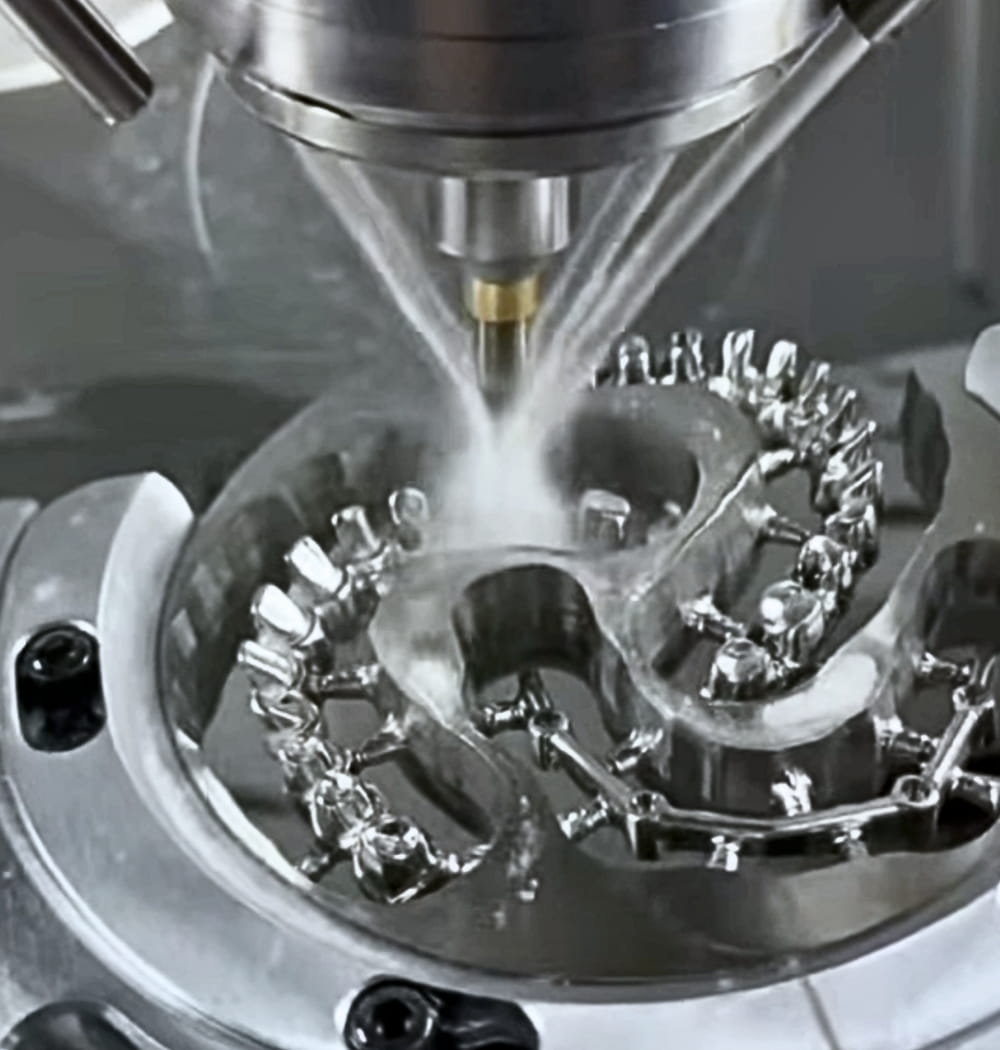
The Challenge of Milling Metals in Dentistry
Metals such as titanium and cobalt-chrome (CoCr) are widely used for dental frameworks, implant bars, and abutment components due to their high strength, wear resistance, and excellent biocompatibility.
However, milling metals ≠ milling zirconia or PMMA. The challenges are greater:
- High Heat Generation — Metal cutting produces significant heat, risking tool and workpiece damage.
- Material Toughness — Titanium and CoCr resist cutting forces, leading to rapid tool wear without the proper tooling.
- Chip Control Issues — Long, curled chips can clog the milling path if not removed efficiently.
The Key Factor: Heat Management in Metal Milling
In dental metal milling, heat is your number one enemy. Excess heat may:
- Cause work hardening, making metals even harder to cut
- Reduce tool coating performance, leading to premature wear
- Create fit inaccuracies from thermal expansion of the workpiece

How to Control Heat in Metal Milling:
✅ Use high-temperature-resistant coatings designed for metals
✅ Maintain optimal spindle speed (RPM) and feed rate per material
✅ Apply proper coolant or mist cooling to stabilize the cutting zone temperature
Best Coatings for Dental Metal Milling
| Coated | Full Name | Why It Works for Metal |
| TiSiN | Titanium Silicon Nitride Coated | Exceptional heat resistance, increased surface hardness, perfect for dry/semi-dry high-speed metal milling |
| CRN | Chromium Nitride Coated | Excellent corrosion and wear resistance, ideal for titanium and CoCr alloys |
| SHC | Super Hard Coated | Handles heavy cutting loads, resists oxidation at high temperature, excellent for difficult-to-machine metals |
Pro Tip: For titanium frameworks, TiSiN-coated cutters are often the first choice for their ability to withstand high cutting speeds and extreme heat without dulling.

Cooling Tips:
- Use mist or flood coolant for continuous thermal control
- Combine coolant flow with air blast for better chip evacuation
- Avoid dry milling unless using top-tier heat-resistant coatings (TiSiN) and specially designed milling systems
5 Quick Steps to Perfect Metal Milling Results
1. Select the right coating — TiSiN, CRN, or SHC for durability and heat resistance
2. Set RPM & feed based on material hardness and manufacturer tool charts
3. Use constant coolant to stabilize temperature and prevent work hardening
4. Clean tools regularly to prevent Built-Up Edge (BUE) formation
5. Replace tools on time to maintain fit accuracy and surface quality
Final Takeaway
Perfect results in dental metal milling come from the combination of:
- High-performance heat-resistant coatings (TiSiN, CRN, SHC)
- Accurate machine parameters and feed/speed optimization
- Consistent heat management with coolant or mist cooling
With the right strategy, you can achieve longer tool life, smoother finishes, and precision fits — every time.
Upgrade Your Dental Metal Milling Today
Discover our TiSiN, CRN, and SHC coated cutters engineered for titanium and CoCr applications, delivering unmatched durability, heat resistance, and cutting performance.